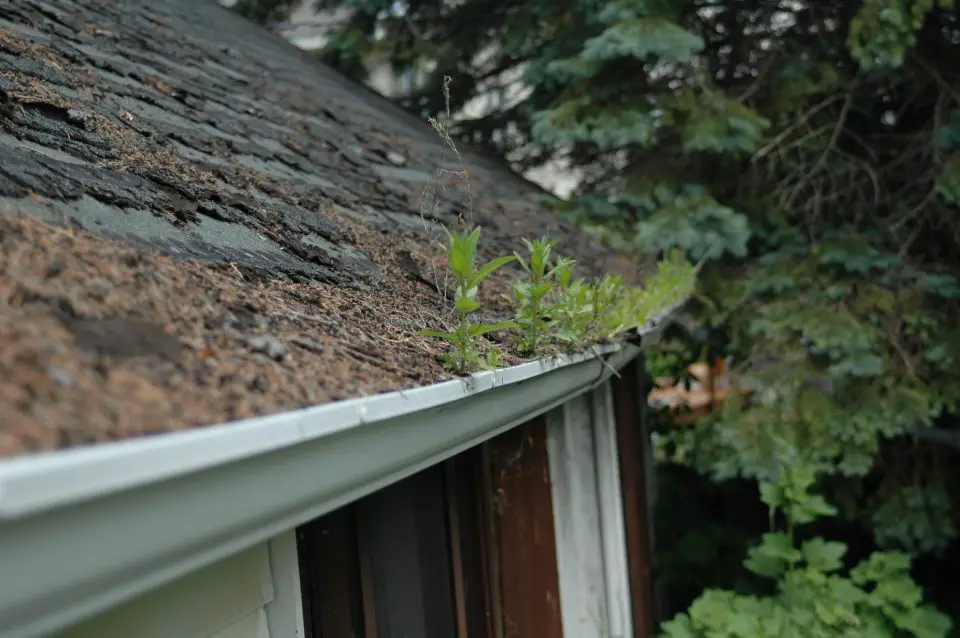
Perfectly working gutters are crucial for the smooth functioning of your property’s roof drainage system. They direct water from your roof and foundation to prevent water damage and protect your home. If left unchecked for a long time, gutters can develop minor issues that can escalate to serious problems. If you’ve neglected your gutters for a long time for one reason or another, they’ll start showing signs of deterioration that will eventually catch your attention. Below are the three major signs your gutters are deteriorating and need immediate attention:
Rainwater Overflowing From the Gutters
Whether it’s heavy or light rainfall, rainwater should flow seamlessly through your roof via the gutters. If you notice your gutters are filling up and water spilling over the edges during rainfall, it typically means there’s a blockage or clog in your gutters. This usually happens over time as debris collects and solidifies in the corner sections of your gutters. When left unresolved for a long time, the overflowing water can lead to staining, damp walls, or even foundation problems.
Overflowing gutters can also cause pressure on the joints, materials, and seams directly supporting them, leading to expensive damage. You can prevent all these by inspecting your gutters closely to catch any signs of blockage or clog early before the rainy season. Ensure they’re checked during an overall roof repair project to fix potential problems in time.
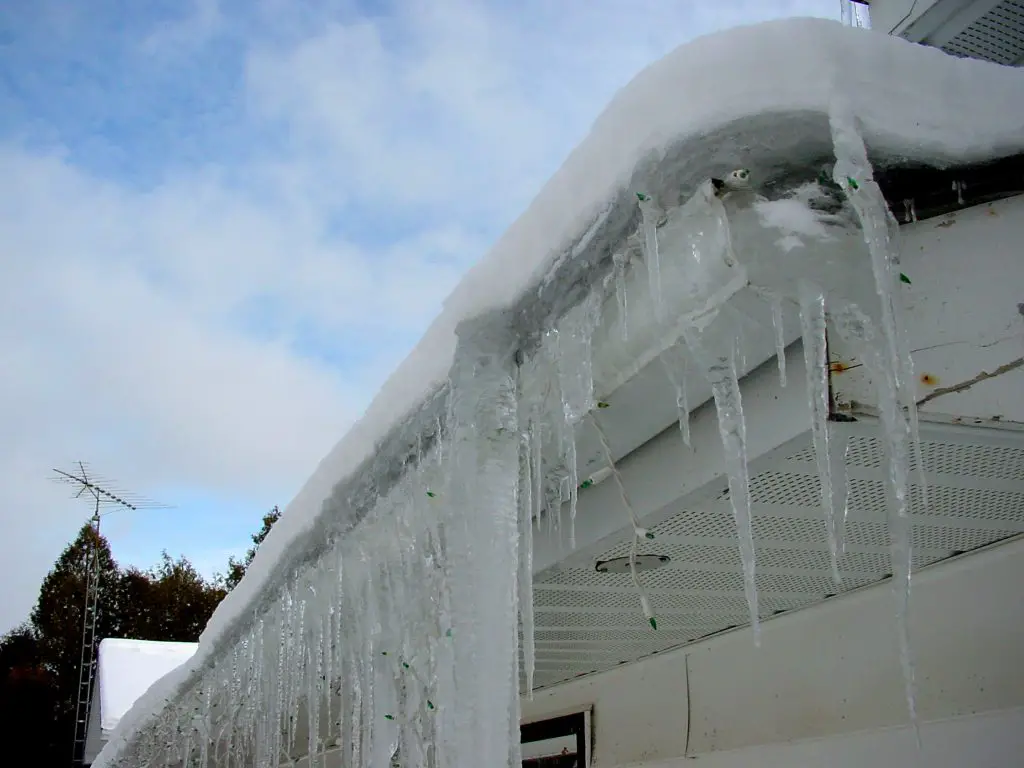
Do you have ice building up in large amounts around your eavestrough in winter? This is not the fault of the trough, but rather a roof surface that’s too warm from insufficient insulation or insufficient ventilation.
Peeling Paint and Rust
Peeling paint and rusted gutters indicate that moisture got access to the metal and that decay is in progress. While it’s normal for gutters and downspouts made of galvanized steel to naturally wear through corrosion or rust, accelerated rusting always indicates damage to the protective layers. When paint starts to peel, it also indicates underlying problems, such as damaged gutters or interior water pooling. Aluminum gutters don’t rust, but they can get weak and cracked over time, especially in climates with sub-freezing temperatures.
To prevent or manage this problem, check all seams, joints, or gutter surfaces for peeling paint, pitting, or rust spots. Spotting heavy corrosion in particular areas could indicate cracks or leaks that need professional sealing. When inspecting, pay close attention to corners, downspout connections, and areas around hangers, as these are more vulnerable than others. You can treat affected areas by sanding and repairing them or using protective sealant to prevent further damage.
Gutter Sections Are Sagging or Pulling Off the Roof
Over time, gutters fill with debris, wet leaves, and moss, adding weight and causing them to sag and sometimes start pulling away from the roofline. The extra weight may even strain the fixings and brackets, raising the risk of the gutters detaching off completely. This problem is more common for aged gutters that have experienced wear and tear, causing sections to weaken and sag with slight weight addition.
Always ensure that your gutters are firmly attached with strong fixings and securely fixed to avoid the risk of sagging gutters. High-stress areas like corners, joints, and downspout connections can be the main culprits for loose connections, leading to a pull of weight toward a particular direction. Check these areas more closely to ensure you’re not missing a spot.
Taking good care of your gutters begins with understanding the tell-tale signs indicating your gutters are in problem. By monitoring these three major signs, you can swiftly catch gutter problems early before they escalate into expensive problems.





I hope you found this content useful!
Your generous support helps me produce more practical, hands-on content that I hope you’ll find useful.
Steve Maxwell