0:00
Sanding wood properly is a very big part of your success with any kind of
0:05
woodworking and especially cabinet making that we're talking about here. And part of that success comes down to using the right tools in the right way
0:14
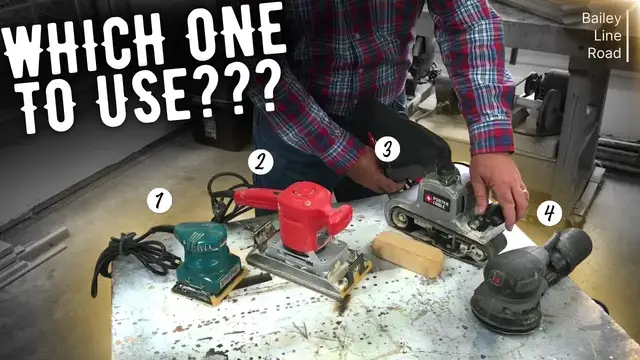
So I use three different kinds of power sanders for my woodwork. If I have a lot
0:22
of material to remove I'm using a belt sander. A 100 grit belt is a great
0:29
all-around starting abrasive level. It's useful for softwoods and hardwoods and I use this when I have to level up panels or if I have a lot of mill marks
0:41
to remove. Now the next sander I like to use is this half sheet inline sander
0:48
Most of the movement of the pad here is back and forth so I can orient it in
0:56
relation to the grain and avoid cross-grain scratches. Now the avoidance of those kinds of scratches is one of the reasons why I definitely do not like
1:08
to use a random orbit sander on fine woodworking. This is a very common tool
1:13
for people to use but because of the action, the rotating action and then the
1:20
orbiting action together of the random orbit sander, that can leave cross-grain
1:25
scratches behind in your woodwork and it looks pretty bad especially after you've
1:32
stained it. You might not notice anything at first but the darker the stain the
1:37
more pronounced any cross-grain scratching will be. So that's why I like
1:41
to stick with the half sheet inline sander for what I would call
1:46
intermediate sanding. Sometimes you can use it on wood that's come from the
1:52
lumberyard if it's particularly smooth. You won't necessarily need to use the belt sander but this is a good intermediate level machine. This
2:01
quarter sheet finishing sander is what I like to use as the final machine
2:08
step. On pine or hardwood I would use a 180-220 grit abrasive. The inline sander
2:19
I like to use 120 and then I finish up with some 220, 180 or 220, used by hand in
2:28
the direction of the grain only. Now one other thing, this is a crepe rubber block
2:33
and it's extremely useful for getting the most out of your sanding belts. It
2:40
doesn't do very much to clean the abrasives on these tools but if you
2:45
start the machine and you hold the crepe rubber block in this orientation
2:51
so that the belt is moving this way and I'm holding the rubber block this way
2:56
it's going to do a fabulous job at getting out the sawdust and some resins
3:01
and really renewing the action of a belt. You can probably get twice the belt life
3:07
if you clean them with a crepe rubber block