Epoxy garage floor coatings can create a durable, glossy surface, but many DIY epoxy floors fail within a few years. The most common problems are poor concrete preparation, moisture in the slab, and using thin epoxy paint instead of industrial coatings. In this guide you’ll learn when epoxy works, when it fails, and better options for garage floors.
Should You Use Epoxy on a Garage Floor?
Epoxy coatings can work very well on garage floors if the concrete is properly prepared and completely dry. When applied correctly, epoxy creates a tough surface that resists oil stains, road salt, and abrasion.
However, epoxy coatings often fail when moisture rises through the concrete or when the floor isn’t properly cleaned and etched before application. Many DIY epoxy kits are also much thinner than professional coatings and can wear out or peel prematurely.
For the best results, concrete preparation and moisture control are just as important as the coating itself.
Pros
- Durable surface
- Chemical resistant
- Easy to clean
Cons
- Requires perfect surface prep
- Moisture causes peeling
- Many DIY kits fail
Why Epoxy Garage Floors Peel or Fail
When epoxy coatings fail, the problem usually isn’t the epoxy itself. It’s the condition of the concrete underneath.
The most common causes of epoxy failure include:
Poor surface preparation
Concrete must be thoroughly cleaned and roughened before epoxy is applied. If the surface is smooth or contaminated with oil or grease, the coating cannot bond properly.
Moisture in the slab
Concrete floors often absorb moisture from the ground. When that moisture moves upward, it can lift epoxy coatings and cause bubbling or peeling.
Using thin epoxy paint instead of real epoxy
Many DIY kits sold in hardware stores are actually thin epoxy paints rather than thick industrial coatings. These products are easier to apply but far less durable.
Cold temperatures during application
Epoxy requires warm conditions to cure properly. If applied in a cold garage, the coating may never harden fully.
When epoxy fails, it often begins with small bubbles or peeling areas that gradually spread across the floor.
How Long Does Epoxy Garage Floor Coating Last?
A well-installed epoxy garage floor can last 10 to 20 years, depending on the thickness of the coating and the conditions in the garage.
Factors that affect longevity include:
- thickness of the epoxy layer
- surface preparation of the concrete
- exposure to moisture
- vehicle traffic and road salt
- UV exposure from sunlight
Professional epoxy systems are usually applied much thicker than DIY kits and therefore last longer. DIY coatings often last 3 to 5 years before showing signs of wear.
If your garage floor experiences heavy use or frequent winter salt exposure, thicker coatings will generally perform better.
Cost of Epoxy Garage Floor Coating
The cost of epoxy garage floors varies widely depending on whether you install it yourself or hire a professional.
Typical costs include:
DIY epoxy kits
$100 – $300 for a standard two-car garage.
These kits are inexpensive but often thinner and less durable than professional coatings.
Mid-range epoxy systems
$300 – $800 depending on quality and floor size.
These products usually include better primers and thicker coatings.
Professional installation
$3 to $8 per square foot.
Professional installers often grind the concrete and apply multi-layer coatings that are significantly thicker and longer-lasting than DIY products. While professional installations cost more, they also tend to last much longer.
Not all epoxy coatings are the same. The best systems typically include multiple layers:
- Concrete primer
Helps the epoxy bond strongly to the floor. - Base epoxy coat
The main protective layer. - Decorative flakes (optional)
Improve appearance and hide imperfections. - Protective topcoat
Adds abrasion resistance and UV protection.
Higher-quality systems also use thicker epoxy formulas that create a stronger surface.
If you plan to apply epoxy yourself, choose a system designed specifically for concrete floors rather than a thin epoxy paint.
Epoxy isn’t the only option for improving a garage floor. Several alternatives can perform just as well or better depending on conditions.
Polyaspartic coatings
These are similar to epoxy but cure faster and tolerate wider temperature ranges during installation.
Concrete sealers
Penetrating sealers don’t form a surface film but protect the concrete from stains and moisture.
Interlocking floor tiles
Plastic garage tiles create a durable surface without coating the concrete at all.
Concrete stain or densifier
These treatments improve the appearance of concrete while strengthening the surface.
Each option has advantages depending on your budget and the condition of your garage floor.
My Experience With Epoxy Garage Floors
Over the years I’ve seen many epoxy garage floors that looked great initially but began peeling after several seasons. In most cases the problem wasn’t the epoxy itself — it was moisture in the concrete or insufficient surface preparation.
When concrete floors are properly cleaned, etched or ground, and completely dry, epoxy coatings can perform extremely well. But if the slab contains moisture or oil contamination, even high-quality epoxy can eventually fail.
For that reason, preparation of the concrete is the most important step in any garage floor coating project.
FAQ Section
Garage Floor Epoxy FAQ
Does epoxy garage floor coating crack?
Epoxy coatings are flexible enough to handle minor movement in concrete. However, large structural cracks in the concrete can eventually show through the coating.
Can you epoxy a damp garage floor?
No. Moisture in concrete is one of the most common causes of epoxy failure. The floor must be dry before epoxy is applied.
Is epoxy or polyaspartic better for garage floors?
Polyaspartic coatings cure faster and tolerate cooler temperatures during installation. Epoxy is usually less expensive and still very durable when installed properly.
How long before you can drive on an epoxy floor?
Most epoxy coatings require 24 to 72 hours before light vehicle traffic is allowed.
What are the best garage floor epoxy coatings for creating a clean, durable concrete surface?
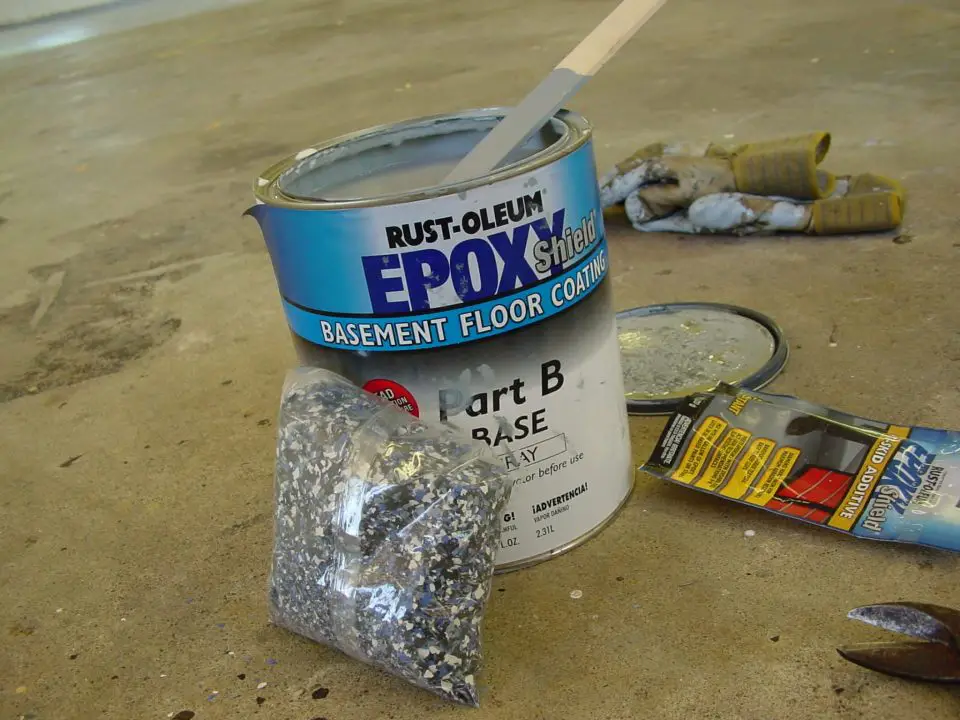
There are a lot of floor coatings out there. I haven’t done long-term testing on a bunch of different options, but I do know that Rust-Oleum Epoxy Shield has stood up very well over more than 15 years of heavy use and counting. Epoxy is the best option I know of for situations like yours, but there are dangers you need to be aware of.
Rust-Oleum still offers a product with the same name, so I think it’s a good bet. The situation I’ve seen is not in a garage either (it was a summer camp craft building), but epoxy works well in many environments. Click here for an experience I had with epoxy applied to a basement floor.
In all situations the issue is adhesion, so you’ll want to follow application instructions closely. Above all, you’re wise to wait until summer. Garage floors get wet and salty in many areas during winter, and that’s no good for coating adhesion.
Wash your floor when winter slush isn’t a problem any more (using plenty of water to wash away any road salt), then let it dry for a week or so of good weather. I’d clean the floor with a shop vacuum as a final step before coating. Epoxy floor coatings look best with little flakes of plastic thrown on the surface when the epoxy is still wet. A pair of golf shoes with spikes lets you walk on the floor to spread flakes on the wet coating. If you do this within an hour of rolling the epoxy on it will flow back and the spike marks disappear. These flecks really do improve appearance, so I wouldn’t go without them.





I hope you found this content useful!
Your generous support helps me produce more practical, hands-on content that I hope you’ll find useful.
Steve Maxwell