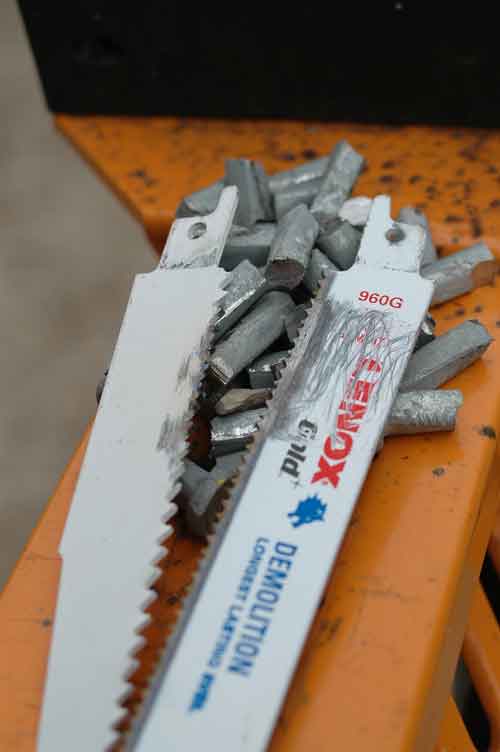
A Saturday spent improving the yard can become noisy before the first cup of coffee has gone cold. The mower starts, followed by the trimmer, leaf blower, pressure washer, or chainsaw. Move indoors, and the sound may continue with a circular saw, drill, sander, router, or shop vacuum.
These tools make demanding jobs quicker, but they also create sustained noise that should be taken seriously. Hearing protection belongs beside safety glasses, gloves, sturdy footwear, and dust-control equipment.
Putting it on before starting a loud task is a useful habit for homeowners and professionals working around powered equipment.
Loud Work Happens Beyond Construction Sites
High-noise work is not limited to factories, road crews, and major construction sites. In practice, an ordinary garden, garage, shed, or home workshop can reach high sound levels as soon as powered equipment starts running.
Typical noise levels for common outdoor and workshop tools include:
- Lawn mower: 90–95 dB
- Leaf blower: 95–105 dB
- Chainsaw: 100–115 dB
- Circular saw: around 100 dB
Actual noise levels vary by machine, operating conditions, and distance from the sound source. Noise level is only part of the picture. When one task leads into another, you may still spend hours around loud equipment even if each machine runs for only part of the day.
Think about what you’ll be running and how long the job will take. Earmuffs should go on before the machine starts and remain in place until the noisy work is finished.
Jobs Where Hearing Protection Makes Sense
A useful benchmark comes from the U.S. National Institute for Occupational Safety and Health (NIOSH), which recommends limiting occupational noise exposure to an average of 85 dBA over an eight-hour workday. For every 3 dBA increase, the recommended exposure time is cut in half. At 100 dBA, it drops to 15 minutes.
Lawn Mowing and Landscaping
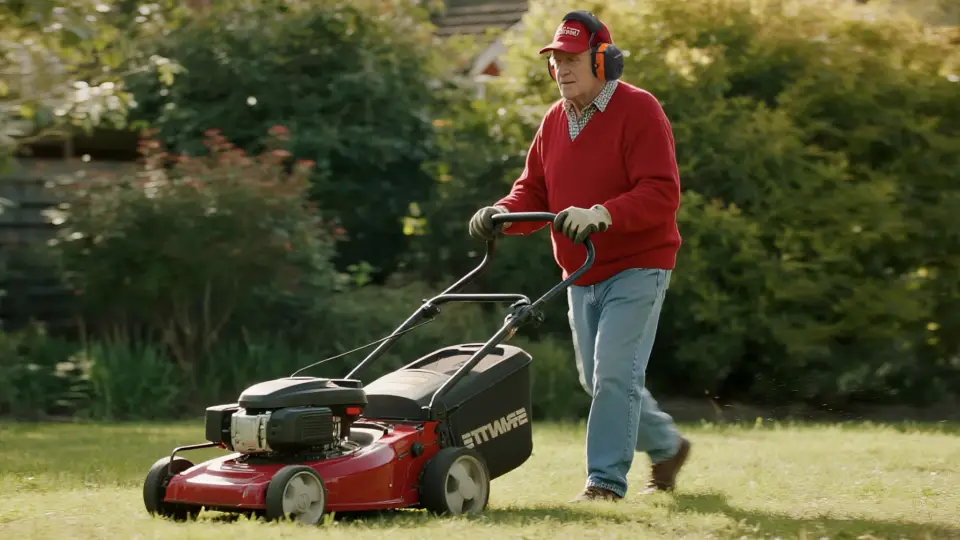
Mowing often involves steady engine noise over an extended period. Landscaping may also include blowers, trimmers, chainsaws, hedge cutters, and other powered tools.
Comfort matters in these situations. A lightweight and adjustable design can make it easier to keep earmuffs in place while walking, bending, lifting, and moving around a property.
Woodworking and Workshop Use
Workshop noise changes from one machine to the next. A saw produces short, sharp bursts, while a sander, compressor, dust collector, or shop vacuum may run much longer.
Keeping Hearing Protection Earmuffs near the workshop entrance or beside frequently used tools makes them part of the setup. This makes it less likely that a “quick cut” turns into a longer session without protection.
DIY and Construction Work
DIY and construction work may involve drilling into masonry, cutting timber, grinding, demolition, and powered cleanup equipment.
Earmuffs should adjust easily, fit alongside other protective gear, and stay secure while carrying materials or moving between indoor and outdoor areas.
What to Look for in Work and Yard Earmuffs
Start with the noise-reduction rating and the standards used to test the product. The earmuffs also need to fit properly around the ears. Glasses, hats, hair, and frequent head movement can all affect how the cushions sit.
For longer jobs, look for soft ear cushions, an adjustable headband, manageable weight, and enough clamping pressure to maintain a secure fit without becoming distracting. Durability matters too, particularly when the earmuffs will live in a garage, travel in a toolbox, or move between job sites.
Bluetooth connectivity can be practical for people who spend long periods mowing, working in a shop, or maintaining a property. It allows them to listen to music, podcasts, or spoken instructions and answer calls without replacing protective earmuffs with ordinary headphones.
Audio should be kept at a sensible level, and users still need to remain aware of nearby people, vehicles, alarms, and changing work conditions. Bluetooth is a useful supporting feature, but the main purpose of the earmuffs remains hearing protection.
Battery life and charging method are worth checking as well. A rechargeable model with enough capacity for several sessions is easier to include in a regular work routine. USB-C charging makes it easier to top up the battery between jobs.
A Bluetooth Option for Work and Yard Use
PROHEAR focuses on hearing protection for work and outdoor environments, including yard work and other high-noise settings. Its Work & Yard Noise Protection lineup covers activities including lawn mowing, landscaping, woodworking, construction, DIY projects, and regular workshop use.
One model in the range is the PROHEAR 037, which offers 30 dB SNR noise reduction, Bluetooth audio, and a lightweight design. It has been tested in accordance with ANSI S3.19-1974 and CE standards.
Bluetooth 6.0 supports wireless music streaming and hands-free phone calls. This can be useful during long mowing sessions, landscaping work, or workshop tasks where repeatedly removing earmuffs to answer a call would interrupt the job.
A rechargeable 1100 mAh battery provides up to 40 hours of continuous use and charges through a USB-C port. This capacity can cover several work sessions before another charge is required. The model also includes an audio jack for wired listening.
Soft cushioned ear pads, an adjustable headband, and lightweight construction are intended to make the earmuffs more comfortable during longer mowing, landscaping, and workshop jobs. For homeowners and professionals who want hearing protection without giving up wireless audio or phone access, the PROHEAR 037 is a practical option to consider.
Build Hearing Protection Into the Routine
The easiest way to use hearing protection consistently is to store it where noisy work begins. Earmuffs can hang beside the workshop door, sit with mower keys, or remain in the same storage area as power tools. Placing them within reach helps turn protection into a normal part of preparing for the job.
Before a longer job, inspect the cushions and headband, check the battery level, and make sure the earmuffs sit securely around the ears. Anyone helping nearby may need suitable hearing protection as well.
Loud equipment is a normal part of lawn care, landscaping, woodworking, construction, and DIY work. Hearing protection should be just as normal. Choose earmuffs based on their rating, fit, comfort, and the way you actually work.
About PROHEAR
PROHEAR develops hearing protection for homeowners and professionals working around lawn equipment, power tools, construction sites, and workshop machinery. The brand focuses on practical features, comfortable designs, and reliable noise reduction for everyday use. Its wider product range also includes hearing protection for shooting, hunting, children, and dogs.




I hope you found this content useful!
Your generous support helps me produce more practical, hands-on content that I hope you’ll find useful.
Steve Maxwell