Off-grid power technology is getting better quickly in surprising ways, and this means it’s never been easier to enjoy running water and electric power for lighting and small cooking jobs in cabins and lakeside cottages that can’t connect to utility power. Interested in long-term backup power to keep a freezer or fridge going in a long-term outage lasting weeks, months or indefinitely? The latest combination of alternative energy technologies can help here too, as you’ll see.
The portable off-grid power system you’ll see here combines a battery power station, solar charging, inverter generator backup, and 120-volt appliances to deliver simple, reliable electricity without permanent installation. Watch the video above for an overview, with more details in the article.
In this post I’ll show you what I’ve been recommending recently to a lakeside cottage owner who came to me looking for design advice for creating a simple, portable off-grid electricity system. The approach uses four main parts and can even provide backup power during outages if you take the equipment back when you return to the city, providing modest amounts of backup power there, too.
Large Portable Power Station: The Core of Your Off-Grid System
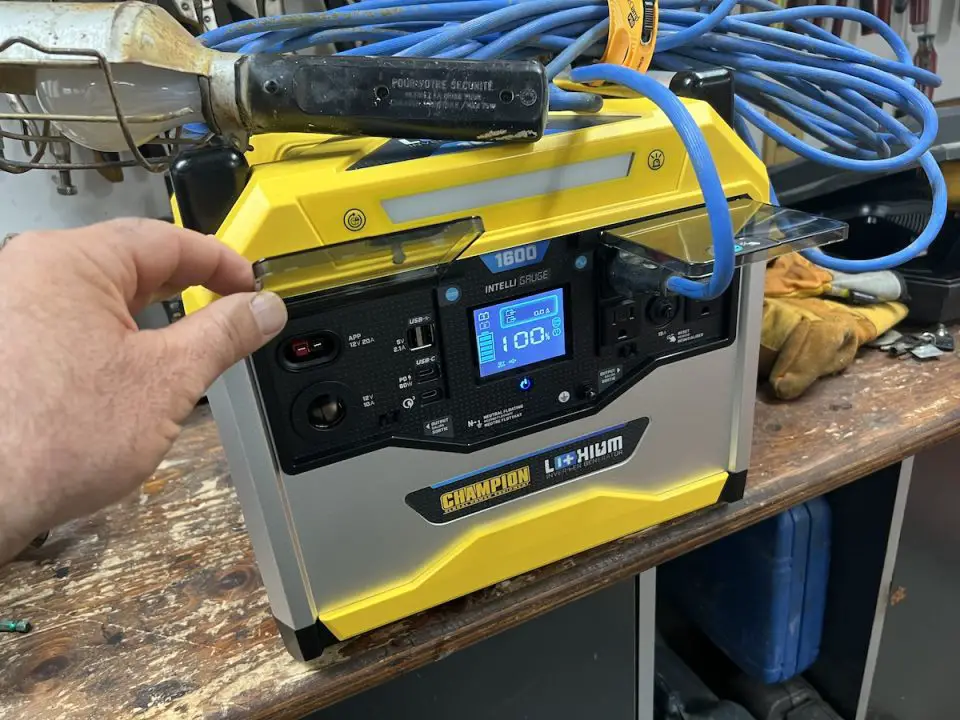
These units combine a high capacity battery with a built in inverter for creating 120 volt outlet power, plus 12 volts and built-in USB charging ports for phones. These units are completely portable and can be recharged in a handful of ways: from solar panels, a portable generator, plugged into a wall when you’re near an outlet, from a portable generator, from a vehicle, and from solar panels. I have a 1.6 kWh portable power station that puts out 3500 watts maximum and this is a good combination of run time, power output and portability. This size is also large enough to directly power a toaster oven, kettle or microwave for most of an hour on a full charge. Don’t get anything smaller.
Solar Panels for Recharging Your Portable Power Station
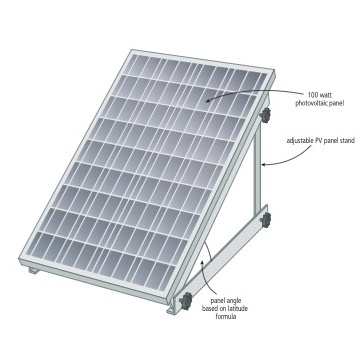
This is for recharging the power station, and it’s key to fuel-independent electricity. Depending on how much power you use, 100, 200 or 300 watts of solar capacity should keep the battery charged. These panels are fairly small, so I recommend using them on the ground in a triangular support frame rather than mounting on a roof. Roof mounting is more complicated, and ground mounting lets you locate your panel in full sun for maximum power output, then move the panel indoors or bring it back to your full-time home when you’re not at the cottage.
Small Inverter Generator for Backup Power and Fast Recharging
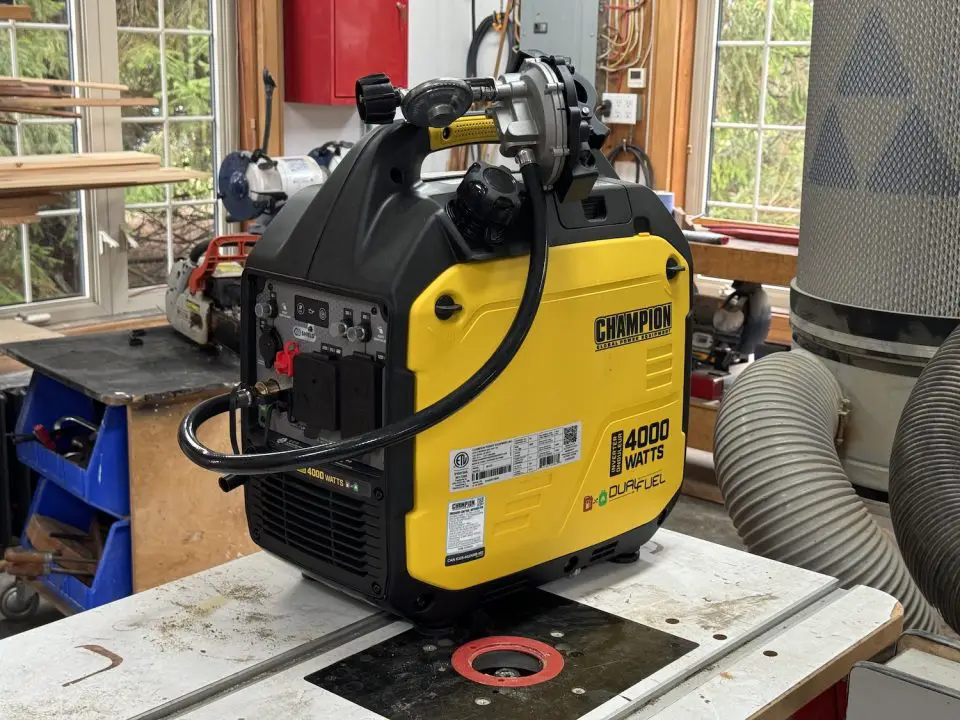
Why a generator if you’ve got solar panels? While not strictly necessary, a small backup generator gives you a chance to recharge your battery if the sun can’t keep up, or if you want to power things directly when your battery happens to be discharged. These units run on gasoline or gasoline/propane/natural gas, they’re super quiet and use fuel very frugally. A 2000 watt unit weighs less than 40 lbs and can also power a kettle, water pump, toaster oven and lights directly, in addition to recharging the battery.
Although portable power stations have gotten much better (and getting better all the time), they still offer a fairly limited amount of power. In tests I’ve run it can provide water for a household of three for 24 hours with showering and clothes washing. Recharging times range from 2 to 6 hours, depending on the source of energy.
120-Volt Submersible Water Pump for Off-Grid Running Water
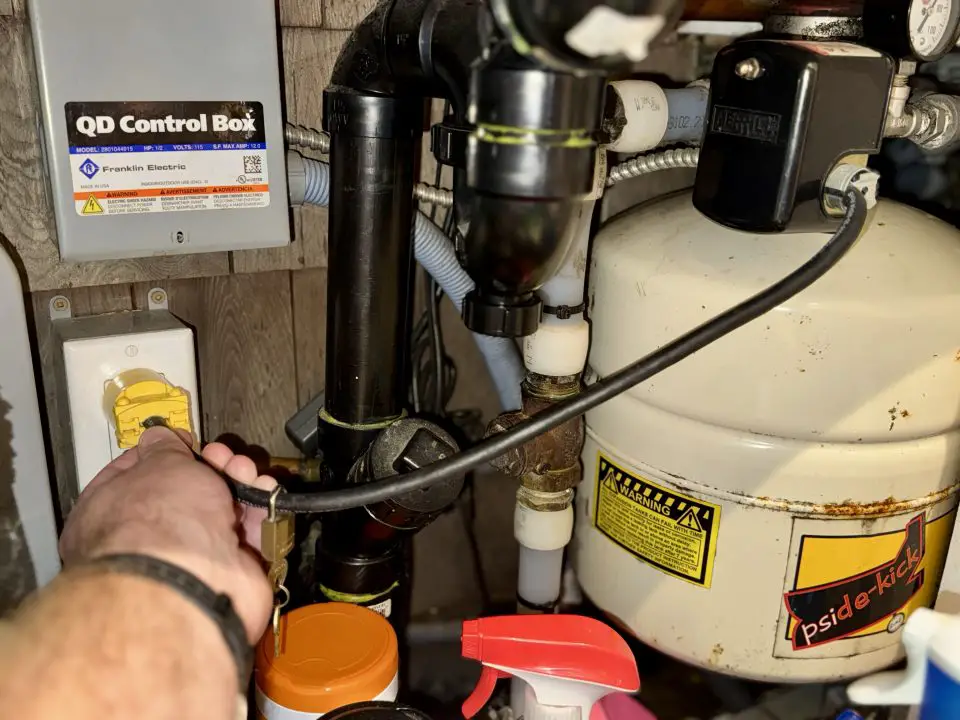
This is to provide running water in your cottage, and the best installations use a submersible electric pump out in the lake or river, sitting on a stand to keep it up off the bottom.
The beauty of the submersible pump is that it needs no priming when you get the system going in the spring because the pump pushes water, it doesn’t draw it up by suction. Priming involves filling the intake like with water, since suction-type water pumps can’t pump air. Also, most submersible water pumps need 240 volts, but 120 volt models are better for off-grid systems because they let you plug the pump directly into a small generator if your battery happens to be too low when you want water.
Long-Term Grid-Down Food Storage with Solar Backup Power
We’ve all experienced power outages for hours or maybe a few days, but much longer term outages are possible. Major weather events, or a breakdown of the power system because of an electro-magnetic pulse event can put the grid down for weeks, months or, according to organizations that monitor these things, perhaps even years. This would turn the world upside down if it happened, and one of the immediate problems would be food storage.
Here at my place we’ve set up a chest freezer connected to a portable power supply that is charged whenever the sun shines with 600 watts of solar panel capacity. The portable station we’re using can keep the freezer going for about 24 hours without charging, but with a connection to solar panels the run time become unlimited, with no need for fuel that would soon disappear from gas stations in a long-term outage.
As off-grid options improve, it’s getting easier and simpler to enjoy electricity in new and more portable ways. Choose the right gear and you’ll have a simple, reliable system of off-grid electricity.

I hope you found this content useful!
Your generous support helps me produce more practical, hands-on content that I hope you’ll find useful.
Steve Maxwell