- Video Watch Time = 5 3/4 minutes
If you use a cordless drill — or want to learn how to use one properly — you’ll find the video above helpful. If you’ve ever been confused by the dials and controls on a drill, this guide will clear things up.
In this article, you’ll get a detailed understanding of a full-featured cordless tool commonly called a cordless drill driver with hammer drill capability. Different brands are surprisingly similar in terms of controls, features, and performance, so what you learn here applies across the board — whether you’re buying a DeWalt, Milwaukee, Makita, Bosch, or another brand.
If you’re finishing a basement, working in a shop, or tackling serious DIY projects, understanding how to choose and use the right cordless drill matters.
Understanding the Adjustment Collar (Drill Mode vs Driver Mode)
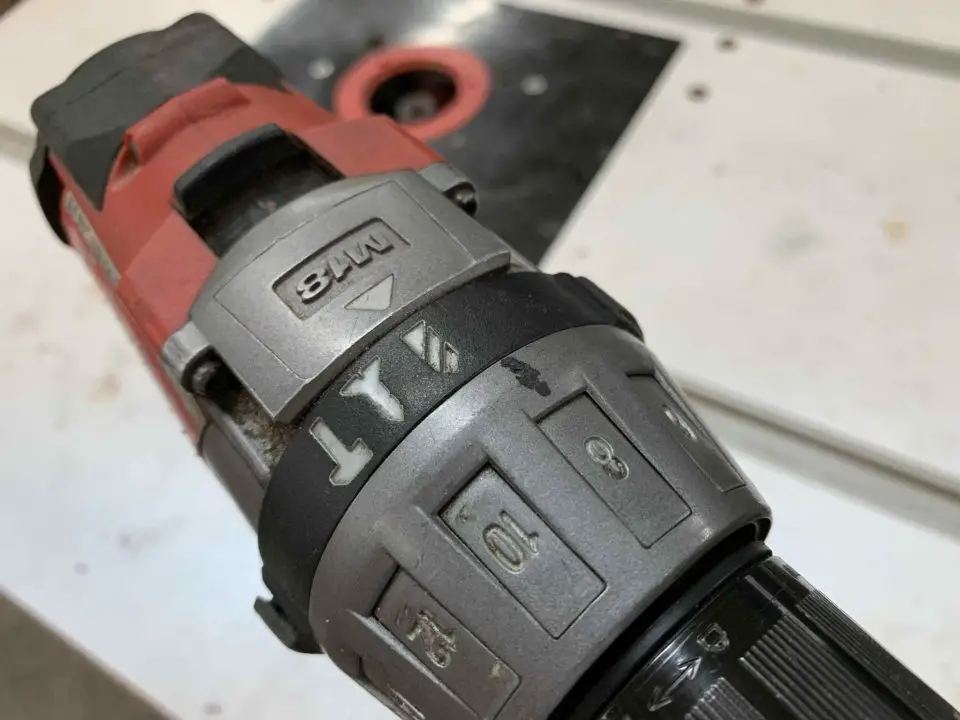
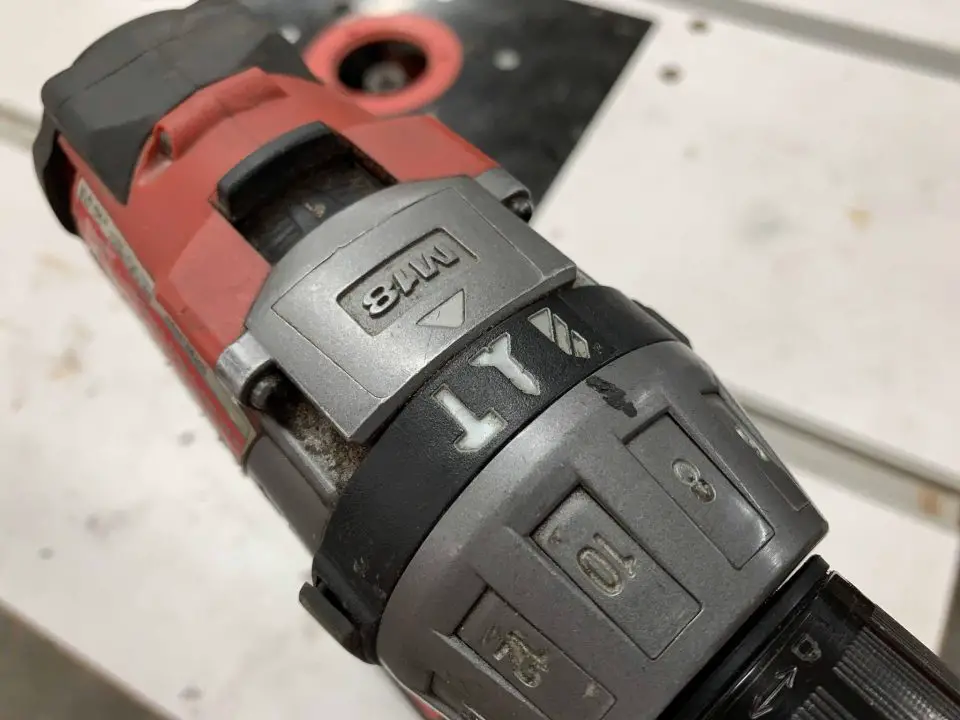
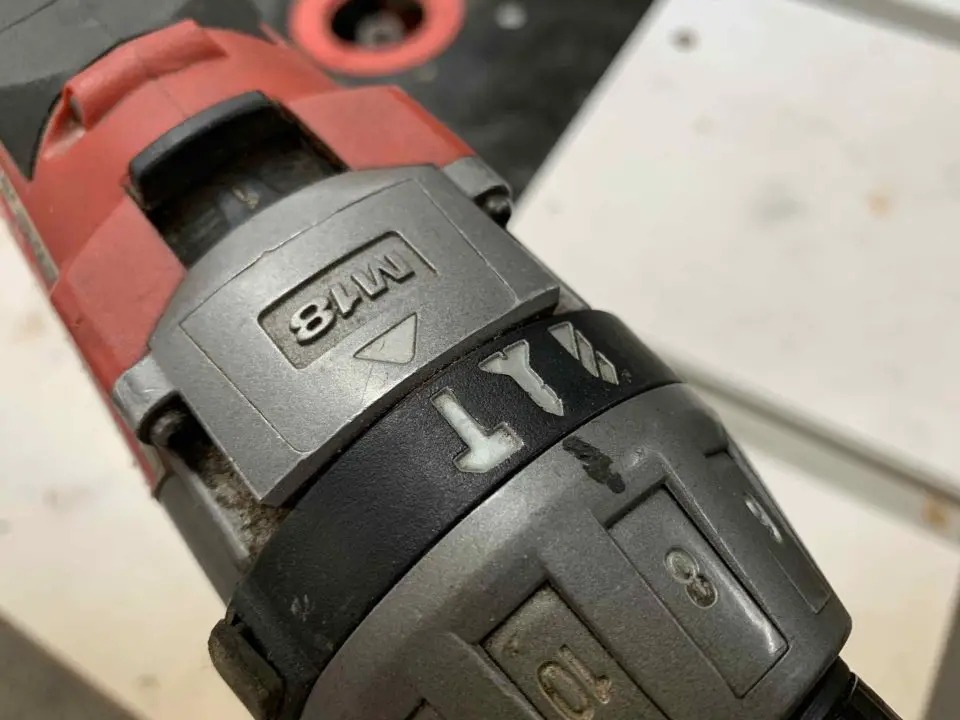
Look just behind the chuck (the spinning end that holds the drill bit). You’ll see a rotating collar with symbols — typically a drill bit icon, a screw icon, and sometimes a hammer icon. When the collar is aligned with the drill bit symbol, the tool is in full lockup mode. This means:
- The motor is directly connected to the chuck
- No internal clutch slipping
- Full power goes straight to the bit
This is the setting you’ll use for drilling holes in wood, metal, and most materials. For most general drilling tasks, your cordless drill should be set to this drilling mode.
Automatic Depth Control (What “Drill Driver” Really Means)
Rotate the collar so the screw icon aligns with the arrow, and you activate the adjustable clutch system. This is where the “driver” part of a drill driver comes in.
In this mode:
- The drill still spins when you pull the trigger
- The chuck will slip once a preset torque level is reached
- You can control how tightly screws are driven
The numbered ring lets you choose torque output. Lower numbers deliver less twisting force. Higher numbers deliver more.
This feature is ideal when:
- Driving screws to a consistent depth
- Working with soft wood
- Preventing stripped screw heads
- Avoiding overdriving drywall screws
Instead of guessing when to stop, the clutch does it for you.
Hammer Drill Mode for Masonry and Concrete
The third setting on many full-featured cordless drills is hammer mode. When you align the collar with the hammer icon:
- The chuck receives full motor torque
- There is no clutch slipping
- A rapid, high-frequency hammering action is added
This hammering vibration makes a dramatic difference when drilling masonry. Without hammer mode, drilling into brick, block, or poured concrete is painfully slow. With hammer mode activated, progress is often three times faster or more. If you’re finishing a basement and need to drill into concrete walls or floors, a hammer drill function is extremely useful.

Lithium-Ion Batteries: Why Modern Cordless Drills Are Better Than Ever
Today, virtually all cordless drills use lithium-ion batteries. Older cordless tools relied on nickel-cadmium (NiCad) batteries. Those had several drawbacks:
- Shorter service life
- Self-discharge during storage
- Memory effect
- Lower energy density
Lithium-ion technology changed everything.
Lithium-ion batteries:
- Store more energy in a smaller space
- Hold their charge for months
- Include built-in electronic protection
- Often feature onboard charge indicators
Most modern batteries have a button you press to check charge level instantly. If you’ve had disappointing experiences with cordless tools in the past, today’s lithium-ion drill systems are vastly better. The difference is not subtle.

High Gear vs Low Gear: When to Use Each Setting
Almost all cordless drill drivers have a two-speed gearbox. You’ll usually see a sliding switch marked:
- 1 (low gear)
- 2 (high gear)
Low Gear (Setting #1)
- Slower chuck rotation
- Higher torque
- Best for metal and masonry drilling
- Ideal for driving large screws
High Gear (Setting #2)
- Faster chuck rotation
- Lower torque
- Best for wood and plastic drilling
- Good for small-diameter holes
Choosing the correct gear improves performance and extends tool life.
Professional-Grade vs Consumer Cordless Drills
The tool shown in the video is a professional-grade cordless drill. A kit with battery and charger typically costs $200–$300.
You can buy entry-level consumer models for much less — sometimes under $100. In my experience, however, you get substantially more tool when you step into professional-grade equipment:
* Stronger motors
* Better clutch systems
* More durable gearboxes
* Longer battery life
* Better overall balance and ergonomics
If you’re doing serious work — especially something like finishing a basement — it makes sense to think of yourself as something of a professional. Cheap tools are often false economy.
Final Thoughts on Choosing the Right Cordless Drill
If you’re choosing a cordless drill, look for:
1. Drill + driver + hammer mode capability
2. Lithium-ion batteries
3. Two-speed gearbox
4. Solid clutch adjustment
5. Professional-grade build quality
Understanding these features removes confusion and helps you buy once — instead of buying twice.
Cordless drills have come a long way. With the right model and proper settings, they’re one of the most versatile and valuable tools you can own. it’s always worth it. Really cheap tools are pretty much a waste of money.
Frequently Asked Questions About Cordless Drill Drivers & Hammer Drills
What is the difference between a drill and a drill driver?
A basic drill simply spins a bit. A drill driver includes an adjustable clutch that limits torque when driving screws. This prevents over-tightening and stripped screw heads. Most modern cordless drills are actually drill drivers.
What does the clutch on a cordless drill do?
The clutch controls how much twisting force (torque) is delivered to the chuck. When the preset torque level is reached, the clutch slips and stops driving the screw deeper. This allows consistent screw depth and prevents damage to materials.
When should I use hammer mode on a drill?
Hammer mode should be used when drilling into masonry materials such as brick, concrete block, or poured concrete. The hammering action adds a rapid vibration that dramatically increases drilling speed in hard materials. It should not be used for wood or metal.
Can I drill into concrete without a hammer drill?
You can, but progress will be very slow and frustrating. A regular drill will struggle in masonry. A hammer drill is far more effective and can reduce drilling time by several times over.
What is the difference between low gear and high gear on a cordless drill?
Low gear (setting #1) provides more torque and slower speed. It’s best for metal drilling, masonry drilling, and driving large screws.
High gear (setting #2) provides higher speed but less torque. It’s best for drilling small holes in wood or plastic.
Are lithium-ion cordless drills better than older NiCad drills?
Yes. Lithium-ion batteries hold their charge much longer, provide more power in a smaller size, and don’t suffer from memory issues like older nickel-cadmium batteries. Modern lithium-ion drills are significantly better than older cordless tools.
Do I need a professional-grade cordless drill for DIY projects?
If you’re doing occasional light work, a consumer-grade drill may be fine. But for serious DIY projects — like finishing a basement or building structures — professional-grade drills offer better durability, power, and reliability. In the long run, they’re usually worth the extra cost.
Is a hammer drill the same as an impact driver?
No. A hammer drill adds vibration for drilling into masonry. An impact driver delivers rotational impacts designed specifically for driving screws and bolts. They serve different purposes.




I hope you found this content useful!
Your generous support helps me produce more practical, hands-on content that I hope you’ll find useful.
Steve Maxwell