Every property runs on water systems most owners never think about: the drains at the foundation, the sump pump in the basement, the sewer lateral under the yard, and the grading that quietly steers rain away from the walls. All of them depend on one humble assembly bolted along the roofline to do its job first.
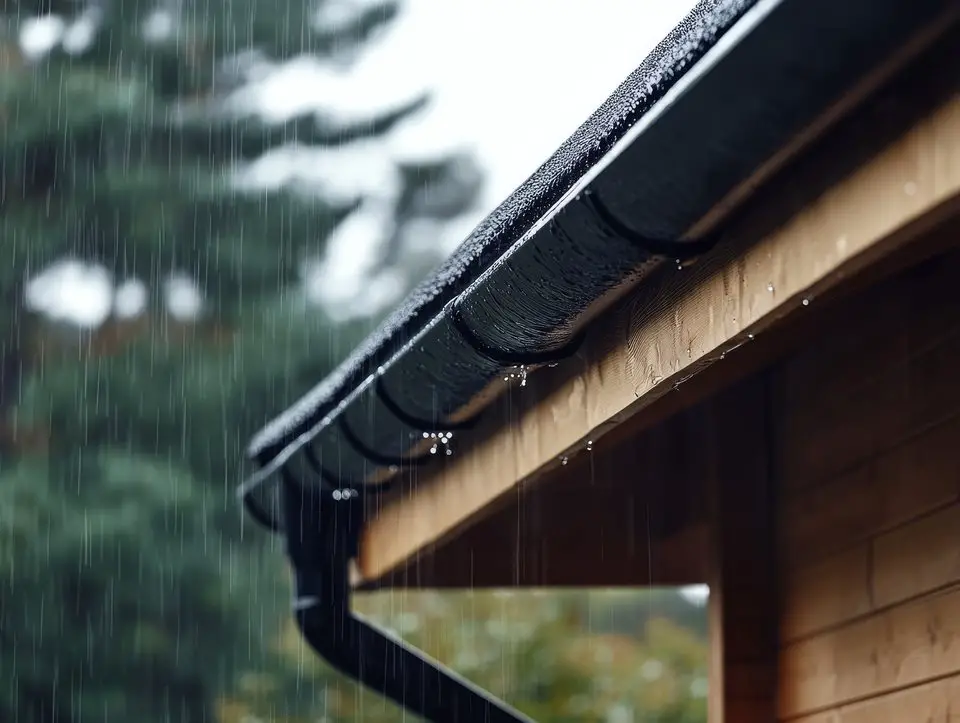
Gutters and downspouts protect a property’s water systems by catching roof runoff before it lands and carrying it to controlled discharge points. Homeowners in Chicago know the stakes better than most, between heavy summer storms, a combined sewer that backs up when overwhelmed, and winters that freeze any standing water. Getting this right keeps foundations, drains, and sewer lines from handling more water than they were built for.
Here is how the protection works, from the roof edge down.
Gutters and Downspouts Set the Foundation for Proper Drainage
A roof is the largest water-collecting surface on any property, and without a proper drainage system, it dumps everything it catches in a sheet along the perimeter, exactly where the foundation and basement walls sit. Gutters intercept that sheet, and downspouts turn it into a few manageable streams.
Everything else in the drainage chain assumes this step has already happened:
- Foundation drain tiles: sized for soil moisture, not roof runoff
- Sump pumps: handle groundwater seepage, not hundreds of gallons at once
- Yard grading: moves surface water slowly, not in torrents
- Sewer laterals and storm connections: have fixed capacity
When the roofline drainage fails or was never installed, each of those systems is asked to absorb the roof’s share on top of its own. Most of them can’t, and the failures show up as wet basements, saturated soil, and backed-up drains.
Downspouts Direct Water Away From Foundations and Sewer Lines
Gutters collect, but downspouts decide where the water ends up, and placement is where most of the protection lives. Extensions of at least four to six feet, or buried drain lines to daylight, keep roof water clear of the foundation and out of window wells. In a city where many older homes once tied downspouts directly into the sewer, disconnecting them takes pressure off a system that already struggles in big storms. Property owners researching gutters and downspouts Chicago contractors install should ask how each bid handles downspout discharge, not just gutter runs.
Exterior specialists such as Lakeland Exteriors & Roofing handle gutters and downspouts alongside roofing work, which keeps the two systems designed as one. Getting discharge right also protects the sewer lateral. Saturated soil around a lateral invites root intrusion and pipe settlement, and every gallon kept away from that line is a repair bill avoided. Downspouts are cheap; sewer excavation is not.
Properly Sized Drainage Channels Prevent Overflow
A gutter that overflows is nearly as bad as no drainage at all, because the water still lands at the foundation after a detour behind the fascia. Overflow comes from undersized troughs, too few downspouts, or a pitch that lets water pool. Professionals size the system to the roof and local rainfall, and the details are worth checking on any quote:
- Gutter width matched to roof area and pitch, often six inches for larger roofs
- One downspout for roughly every 30 to 40 feet of gutter run
- A slope of about a quarter inch per ten feet toward each outlet
- Hangers spaced closely enough to carry the weight of water and ice
A correctly sized system moves water through even the storms that overwhelm undersized ones. It also spares siding, mulch beds, and walkways from the erosion and staining that overflow causes.
Controlled Runoff Reduces Pressure on Yard Drainage
A yard’s drainage is built for gradual flow: swales, catch basins, French drains, and grading that moves water a little at a time toward a safe outlet. None of it is designed to take a roof’s worth of rain in one rush. When downspouts dump concentrated streams onto the lawn, those systems overload within minutes, water backs up, and low spots turn into standing pools that kill grass and breed mosquitoes.
Controlling where and how runoff is released keeps the yard’s systems working as intended. Splash blocks slow the stream, extensions spread it over a wider area, and buried lines carry it directly to a drain or daylight. The ground receives water at a pace it can absorb, the catch basins never surge, and the grading keeps doing its quiet job through even the heaviest storms.
Maintenance Keeps the Whole Water System Working
A roof drainage channel protects other systems only while they’re clear. Leaves, shingle grit, and nesting debris clog outlets. A clogged drain overflows in the first heavy rain, sending water exactly where the system exists to keep it from going. Twice-yearly cleaning, in spring and after leaf drop, is the minimum for most properties. Check again after major storms.
Winter adds a second job. Standing water in a clogged or poorly pitched gutter freezes. Ice dams then force meltwater under shingles and into walls. The Department of Energy’s Building America Solution Center explains that an ice dam is an accumulation of ice at the eave that prevents melted snow from draining off the roof. Attic air sealing, insulation, and ventilation are the combination that keeps roof edges from warming enough to start the cycle. Clear drainage channels and proper pitch handle the drainage side of that equation. Guards reduce the workload but don’t eliminate inspection. A few hours of maintenance a year protects the foundation, basement, and sewer line at once.
Conclusion
Gutters and downspouts protect a property’s water systems by intercepting roof runoff before it reaches the foundation, delivering it in controlled streams to safe discharge points, and sparing the drain tile, sump pump, grading, and sewer lateral from volumes they were never designed to carry. The roof sheds hundreds of gallons in an ordinary storm, and the gutter assembly is the only thing deciding whether those gallons become a splash on the lawn or pressure against a basement wall. Sizing, downspout placement, and seasonal cleaning are what keep that assembly doing its job. Property owners who treat gutters as part of the drainage system rather than an accessory to the roof spend far less on the systems below. The protection starts at the roofline and runs all the way to the sewer. Keep the first system working, and the rest stay dry.





I hope you found this content useful!
Your generous support helps me produce more practical, hands-on content that I hope you’ll find useful.
Steve Maxwell