Roofing projects often require much more than carrying shingles up a ladder. On commercial buildings, large homes, and complex construction projects, contractors may need to move thousands of pounds of roofing materials from the ground to an elevated work area.
Bundles of shingles, rolls of roofing membrane, insulation boards, metal roofing panels, lumber, and mechanical equipment can be difficult to move safely by hand. Depending on the building size and materials, roofing contractors may rely on cranes, material hoists, and specialized rigging equipment to get everything onto the roof.
The lifting process requires careful planning. Contractors need to consider the materials’ weight and dimensions, the building’s height, available access, weather conditions, and where each load will be placed once it reaches the roof.
Here is a closer look at how heavy roofing materials are safely lifted and positioned.
Planning the Lift Before Materials Leave the Ground
A successful lift begins before the crane or hoist starts moving.
Contractors first need to understand exactly what is being lifted. A pallet of shingles behaves very differently from a bundle of long metal roofing panels. Weight, dimensions, balance, and available lifting points can all influence how a load should be handled.
The crew also needs to decide where to place materials on the roof. Simply finding an open area is not enough. Concentrating large amounts of heavy material in one location may place unnecessary stress on the roof structure.
For larger projects, materials may be distributed across several staging areas to position them closer to where crews will use them.
Planning ahead also reduces unnecessary material handling. When supplies are delivered near the installation area, workers spend less time carrying heavy materials across the roof.
Using Cranes to Lift Roofing Materials
Cranes are commonly used when materials need to reach tall or hard-to-access roofs.
A crane can pick up materials from a staging area and place them directly on the roof. This method may be used for pallets of roofing products, insulation, membrane rolls, metal panels, lumber, equipment, and other supplies.
The crane itself is only part of the lifting system. Roofing materials must also be properly attached to the crane.
This is where rigging equipment is important.
Rigging connects the crane to the load. The specific equipment used depends on the weight, shape, and other characteristics of the materials being lifted.
Lifting Slings and Shackles
Lifting slings are among the most common rigging tools for material handling.
Synthetic web slings can be useful when handling materials that could be scratched or damaged by metal rigging. Wire rope slings may be selected for demanding lifting applications, while chain slings are commonly used when durability and resistance to specific types of damage are important.
The sling must have the appropriate capacity for the load and be properly configured.
Shackles are another common type of lifting hardware. They can be used to connect slings to lifting points, hooks, or other rigging components.
Before lifting begins, workers should verify that slings, shackles, hooks, and other hardware are compatible with both the load and the lifting configuration.
Handling Long Metal Roofing Panels
Metal roofing panels require special attention because they can be long and relatively flexible.
If a long bundle is improperly supported, the panels may bend, twist, or shift during the lift. This can damage the roofing material before it even reaches the installation area.
For longer loads, contractors may use spreader bars or a lifting beam.
These devices support the load at multiple points. By distributing lifting forces across the material, crews can reduce excessive bending and keep the load more stable.
Multiple slings may connect the roofing material to the beam, resulting in a more balanced lifting arrangement.
This technique can be especially useful for long metal panels, structural components, and other materials that require support over a wider area.
Controlling Materials During the Lift
Wind can pose challenges when lifting roofing materials.
Large panels, insulation boards, and similar materials have substantial surface area. Even moderate wind can cause a suspended load to rotate or move unexpectedly.
When appropriate for the lift, crews may use tag lines to help control the load’s orientation from a safer position.
A tag line allows workers to guide a suspended load without trying to physically grab and control it while it is moving.
Always consider weather conditions before lifting operations begin. If conditions make the load difficult to control safely, the lift may need to be postponed.
Using Hoists for Roofing Projects
Not every project needs a large crane.
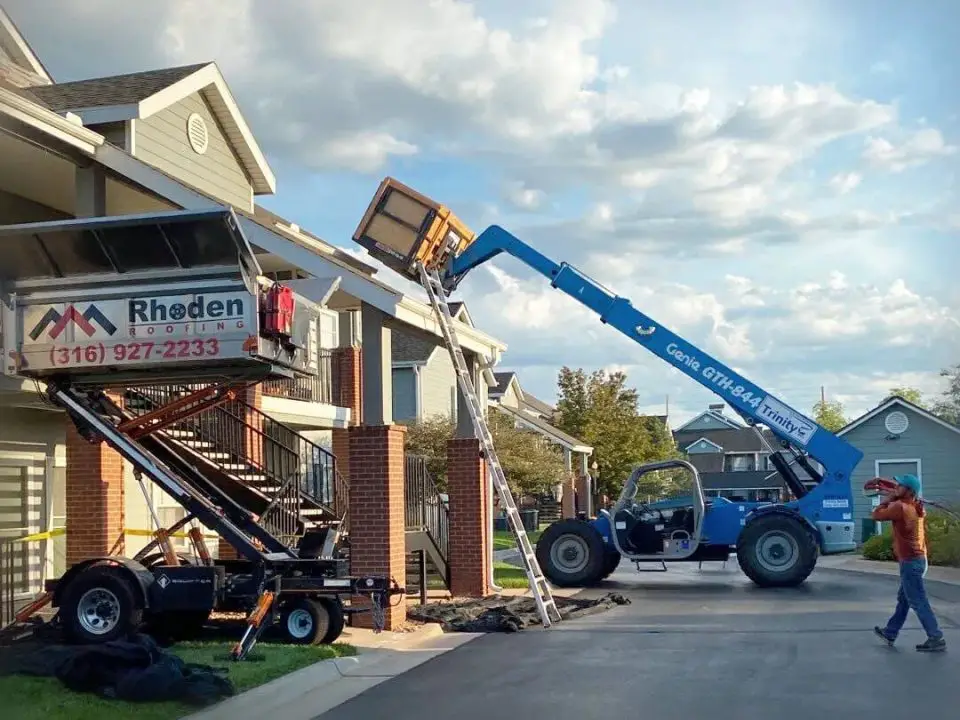
Material hoists can transport roofing supplies from ground level to elevated work areas. These systems are especially helpful when crews need to move materials repeatedly throughout the day.
Chain hoists may also be useful for certain lifting or positioning tasks. Rather than transporting large quantities of material from the ground to the roof, chain hoists are often helpful when workers need controlled movement over short distances.
The appropriate lifting method depends on the building, the weight of the materials, available access, and the work to be performed.
Lifting Rooftop Equipment
Roofing projects sometimes involve much heavier loads than roofing materials alone.
Commercial buildings often have HVAC systems, ventilation equipment, exhaust fans, and other mechanical components installed on the roof.
During a roof replacement, you may need to remove, reposition, or replace equipment. These lifts require careful planning because the equipment may be heavy and must often be positioned precisely.
A rigging setup might include several lifting slings connected with shackles to designated lifting points. A spreader beam may be used to maintain proper spacing between the slings and to help distribute lifting forces.
Once the equipment reaches the roof, workers may use additional lifting and positioning equipment to position it in its final location.
Inspecting Rigging Tools Before Use
Lifting equipment is subjected to significant forces, making regular inspection important.
Before a lift, workers should inspect the equipment for signs of damage or excessive wear.
Synthetic slings can develop cuts, tears, burns, damaged stitching, or other defects. Wire rope slings may show signs of corrosion, broken wires, crushing, or distortion. Inspect shackles, hooks, and other hardware for damage or deformation.
Equipment that does not meet applicable inspection requirements should not be used.
Crews also need to understand the rated capacity of each component in the lifting system. The entire rigging arrangement must suit the load’s weight and characteristics.
Sling Angles Matter
The angle of a lifting sling can significantly affect the forces on the sling and the rest of the rigging system.
As sling angles become more horizontal, the tension on the individual sling legs can increase. This means contractors cannot simply divide the total load weight by the number of slings and assume each sling carries an equal share.
During lift planning, consider load weight, sling configuration, sling angle, center of gravity, and lifting points.
For unusual or especially heavy loads, proper lift planning becomes even more important.
Safely Placing Materials on the Roof
The job isn’t finished when the materials reach roof level.
Workers need to guide the load into the correct staging area while staying clear of suspended materials. Communication among the crane operator, signal person, rigging crew, and roofing workers is critical at this stage.
Materials also need to be secured after placement. Roofing materials, particularly lightweight insulation, metal panels, and membrane products, can be vulnerable to wind.
Proper staging helps protect both workers and materials while keeping the project organized.
The Importance of Proper Rigging in Roofing Work
Getting heavy materials onto a roof may look straightforward from a distance, but every successful lift requires planning, equipment selection, communication, and careful execution.
Cranes and material hoists provide lifting power, while tools such as lifting slings, shackles, hooks, spreader beams, chain hoists, lifting clamps, and tag lines help crews secure, support, position, and control various loads.
The right lifting method varies from one roofing project to another. Building height, roof design, material weight, access, weather, and job site conditions can all affect how materials are transported.
By carefully planning lifts and using properly selected rigging equipment, contractors can move heavy roofing materials more efficiently, reduce unnecessary handling, and help protect workers, the building, and the roofing materials themselves.




I hope you found this content useful!
Your generous support helps me produce more practical, hands-on content that I hope you’ll find useful.
Steve Maxwell