A house can look tight from the curb and still leak at the edges. Pests do not need a broken window or an open door. A hairline gap beside a gas line, a curled corner of weatherstripping, or a torn screen on a basement window gives a determined insect or rodent all the access it needs. Once inside, the problem spreads from the outdoors to the pantry, the wall voids, and the attic within days. Fortunately, most entry points are ordinary maintenance flaws, not structural failures. Homeowners who inspect and repair them on a regular schedule remove the easiest routes into the home, and that alone often reduces the pest activity noticed indoors. The sections below explain where those openings form, which pests use them, and which repairs matter most.
Small Cracks, Big Invitations
Exterior wear is gradual, which is why it goes unnoticed. Caulk around window frames shrinks and splits after repeated cycles of heat and cold. Siding loosens as fasteners back out or as wood absorbs moisture and warps. Weatherstripping flattens and tears where doors are used most. Concrete and block foundations develop hairline cracks as soil shifts, and the mortar between bricks can erode until a visible slot forms.
Each flaw looks trivial on its own. Together, they create a network of entry options around the whole perimeter. Openings around utility lines deserve special mention because they are rarely inspected. Where pipes, cables, and refrigerant lines pass through a wall, installers often leave a gap around the penetration, and the original sealant can dry out and pull away over the years.
Moisture compounds the problem. Damaged siding and failed caulk let water reach sheathing and framing, and softened wood is easier for carpenter ants to excavate and for rodents to gnaw. A minor gap that once admitted only air can eventually become a wide, damp, sheltered passage. Repairing the flaw early is nearly always simpler than repairing what it allowed to happen.
How Ants, Spiders, Cockroaches, and Rodents Use Each Opening
Different pests exploit different gaps, and body size explains most of it. Ants can pass through cracks barely visible to the eye, and a single scout that finds a gap in a foundation or window frame will lay a scent trail that draws others in. Spiders usually follow their prey. A cluster of insects gathering around a lit doorway attracts hunters, and a torn screen or worn door sweep lets them slip inside.
Cockroaches flatten their bodies to squeeze into narrow crevices, and they favor warm, damp spots. Gaps around plumbing lines, dryer vents, and cracked foundation walls give species such as the American cockroach easy passage from mulch beds, drains, and utility areas. Rodents are a different story. A young mouse can pass through an opening about a quarter inch wide, roughly the diameter of a pencil, and rats need only about half an inch. Both gnaw soft materials like weathered wood, foam, and rubber to enlarge the hole.
Wasps, stink bugs, and boxelder bugs round out the list, often entering through soffit vents, loose siding, and attic openings in autumn when they seek shelter. Because so many species share the same weak spots, sealing one gap tends to reduce several kinds of pressure at once.
A Practical Checklist for Sealing and Repairing the Exterior
A walk around the house with a flashlight, in daylight and again at dusk, reveals most problems. Dusk helps because light showing through a gap from indoors marks it clearly. These repairs address the most common access points:
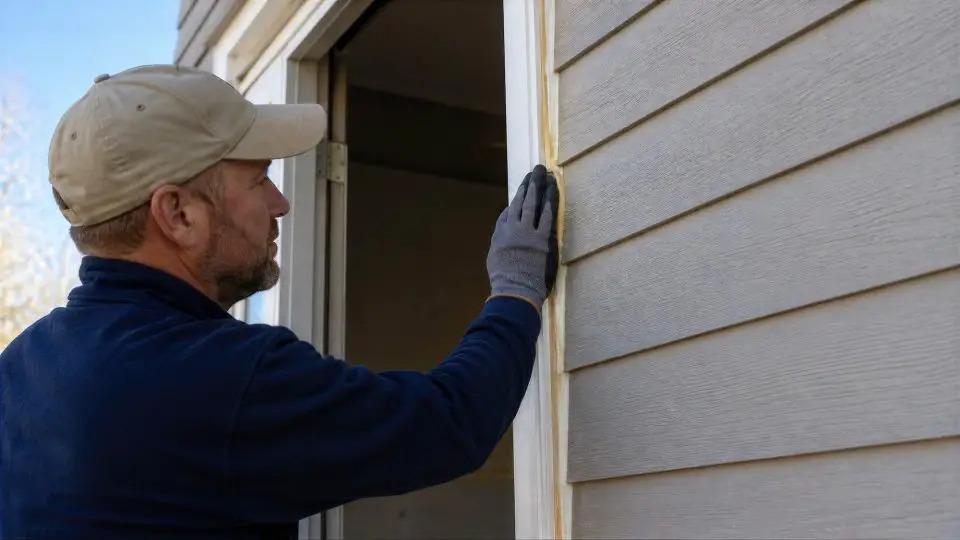
- Recaulk window and door frames with exterior-grade sealant after scraping out cracked material.
- Replace worn weatherstripping and install door sweeps, since daylight under a closed door means a pest can enter there.
- Patch torn screens and cover attic, crawlspace, and dryer vents with fine metal mesh.
- Fill foundation cracks with masonry sealant or hydraulic cement, and repoint crumbling mortar.
- Pack utility penetrations with coarse steel wool or copper mesh, then seal over it with caulk or foam.
- Refasten loose siding, replace rotted trim, and repair damaged fascia and soffits.
Materials matter as much as coverage. Rodents chew through plain expanding foam and soft caulk, so metal mesh should form the base layer wherever gnawing is likely. Shrubs touching the wall and firewood stacked against siding also deserve attention, because they give pests cover and a bridge to the structure. Some spots, such as roof lines and high soffits, are awkward for homeowners to inspect, and a Corky’s Pest Control pest control team can check these areas as part of an exterior evaluation.
Hidden Gaps and Recurring Activity Call for a Trained Eye
Sealing what is visible does not always end the problem. Pests that keep appearing after repairs, such as ants trailing along the same baseboard or droppings in a garage corner, point to an entry route that was missed or a nest already established inside the structure. Many access points hide behind trim, under deck boards, inside soffits, or along the top of foundation walls, where only a trained eye or an inspection camera reaches them.
Timing offers clues. Scratching in walls at night suggests rodents, while a sudden burst of winged insects in spring can mean a colony inside the wall. Once a nest exists, sealing the opening can trap the insects indoors and push them deeper into the home, so the order of removal and exclusion matters. Professional experience pays off here. A Corky’s Pest Control pest control team can trace activity back to its source, identify the conditions that attract pests, and recommend repairs in the right sequence.
Recurring activity is the clearest signal to ask for help, particularly when repairs have already been made. Expert guidance also prevents a common mistake: sealing every crack quickly while ignoring the moisture or food source that drew pests to that wall in the first place.
Building an Inspection Habit Around the Seasons
Repairs last longer when they follow a schedule. Spring is the time to assess winter damage, since frost heave cracks foundations, ice pulls caulk away, and storms loosen siding. Early summer suits screen repair and vent checks, before windows stay open through the warm months and insect activity peaks. Autumn, the busiest season for rodents and overwintering insects, calls for a second pass over doors, weatherstripping, and utility penetrations before temperatures fall.
A brief log kept in a phone or notebook makes the routine easier. Recording the date, location, and materials used for each repair allows a homeowner to spot patterns, such as a corner of the house that repeatedly needs recaulking because of a drainage problem. Gutters and downspouts belong in the routine as well, since overflowing water saturates soil and wood along the foundation and attracts moisture-loving insects.
Ten minutes after a heavy storm is often enough to catch new damage. Fallen branches, dislodged flashing, and shifted vent covers show up quickly, and prompt fixes keep small breaks from becoming established pathways.
Final Analysis
Household pests rarely need much space, and the exterior of an average home offers plenty. Worn caulk, torn screens, loose siding, tired weatherstripping, foundation cracks, and unsealed utility lines all serve as invitations that repairs can withdraw. The work is modest: inspect, seal with materials suited to the pest, repair what is damaged, and repeat with the seasons. No home can be made completely impenetrable, and some infestations begin with conditions that homeowners cannot easily see. Even so, a well-maintained exterior narrows the routes available, makes any remaining activity easier to trace, and reduces how often pests reach the living space.





I hope you found this content useful!
Your generous support helps me produce more practical, hands-on content that I hope you’ll find useful.
Steve Maxwell