I’ve built houses from scratch from foundation to roof peak, and I’ve also managed and worked on a number of older home renovations and restorations. Because of that, I can say with confidence that these two types of projects are fundamentally different. If you own a genuinely old house — especially one built the old way — there are some experiences I can share that may help a great deal, and in some cases may make the difference between a deeply satisfying outcome and an expensive set of regrets.
Old House Renovation vs New Home Construction: The Core Difference
At a glance, all houses seem to share the same basic elements. They have roofs, walls, windows, doors, plumbing, and wiring. But once you get past the surface, houses built before — or even shortly after — the Second World War were conceived and constructed very differently from those built later.
Homes built before about 1950 were often designed to breathe, to flex, and to be repaired incrementally over generations. Post-war houses, particularly those built after about 1955, were increasingly standardized, systematized, and designed around modern materials and industrial construction methods. This distinction matters, because renovating an older house as if it were a newer one is one of the most common and costly mistakes people make.
Why Older Home Renovations Are More Complex Than Modern Builds
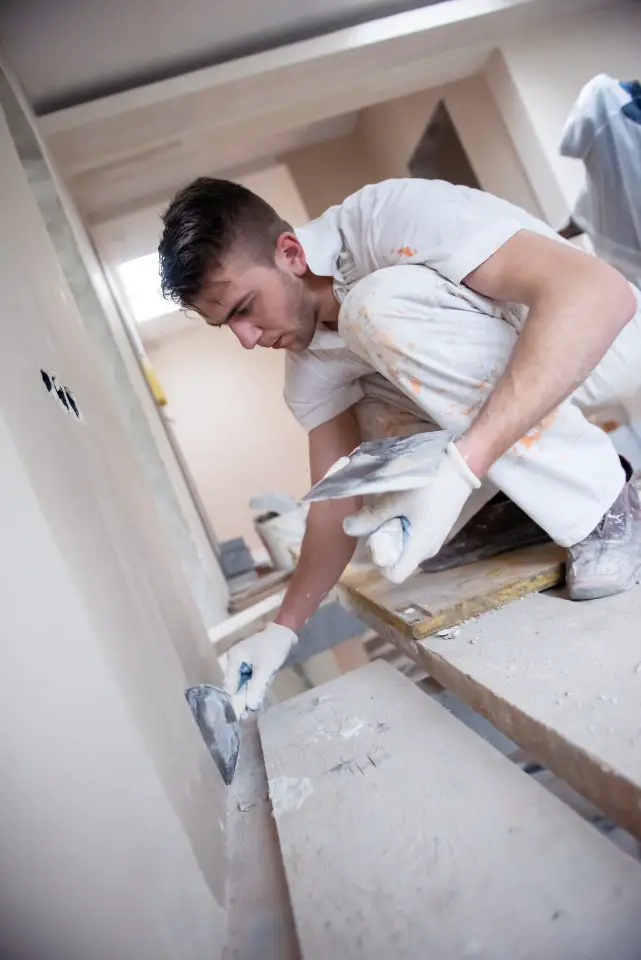
There are three reasons major renovations or restorations of older homes are fundamentally different from work on newer houses. These differences are where difficulties most often originate.
1. Older Homes Require More Time, Patience, and Judgment
Older houses are full of obscure, one-of-a-kind challenges. Hidden framing methods, long-forgotten modifications, improvized repairs, and material choices that no longer exist are common. It’s not unusual for it to take as long to decide how a situation should be handled as it does to actually carry out the work. Rushing decisions in an old house almost always leads to larger problems later. Experience-based judgment matters more than speed.
2. Not Every Contractor Is Suited to Old House Restoration
Older homes require a special kind of contractor. I often compare this to medicine. Some procedures are complex but have become routine through repetition — hip replacements, cataract surgery, heart bypass operations. They’re serious, but systemized.
Other situations — a brain tumour in a difficult location, a spinal injury, or a complex trauma — require custom judgment, adaptability, and deep experience. They can’t be handled with an industrial approach.
Major renovations of older homes fall into this second category. They require tradespeople who are comfortable making informed decisions as conditions reveal themselves, and who understand when to preserve, when to modify, and when to stop and rethink. Assuming any competent contractor can handle this kind of work is a common — and costly — mistake.
3. Fixed-Price Contracts Often Don’t Work for Old Houses
One of the biggest misunderstandings in older home renovation is the expectation of fixed, contractually-bound pricing. Every major renovation of an older house contains unknowns that cannot be fully discovered until walls are opened, attics explored, and mechanical systems examined closely. No contractor, no matter how experienced, can know what is genuinely unknowable in advance.
If you insist on a fixed price, you’ll either force the contractor to pad the estimate heavily, or you’ll invite conflict when inevitable surprises arise. When you find a trustworthy contractor who understands older homes, a cost-plus-materials arrangement is often the most practical and fairest approach. It allows the work to proceed honestly, based on reality rather than contractual pressure.
What Actually Matters Most in Old House Restoration Projects
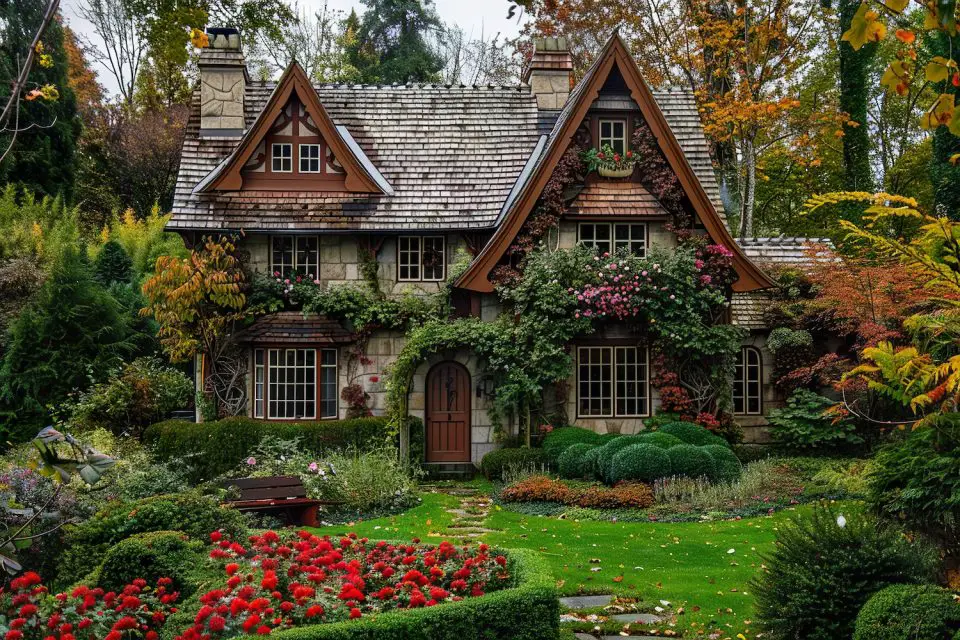
What matters most in restoring an older home isn’t speed or modern efficiency. It’s judgment, sequencing, restraint, and respect for what already works. Every older house is unique, and the best outcomes come from responding thoughtfully as the true nature of the building reveals itself. I often describe this as “dancing with the situation.” You react, regroup, and adjust as needed, instead of forcing the house into a rigid plan conceived before the work began.
How Experience Changes the Way You Approach Older Houses
Experience teaches you that not every old feature is a flaw, and not every problem requires a dramatic solution. Over time, you learn when intervention is necessary and when leaving well enough alone is the wiser choice. That kind of discernment can’t be rushed, and it can’t be replaced by modern checklists or generic renovation formulas. Older homes reward patience, humility, and a willingness to listen to what the building is telling you.
A Quiet Word About My Old House Guide
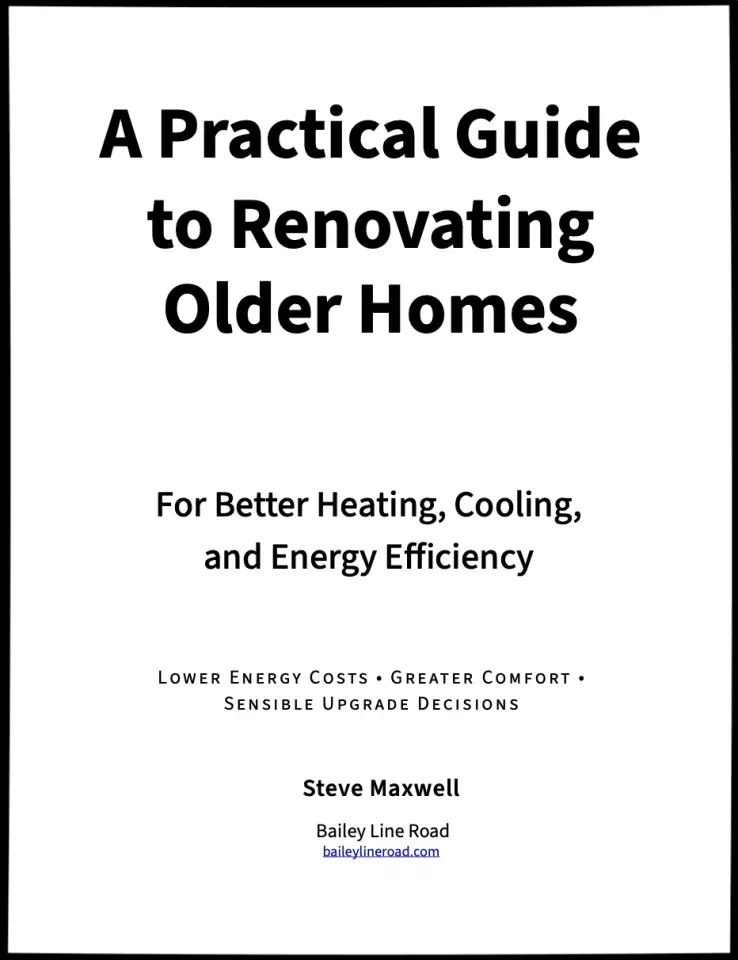
I’ve put together a 128-page Old House Guide as a companion for people navigating these realities. It isn’t a magic solution, and it’s not a substitute for good judgment or skilled trades. But it does reflect patterns, pitfalls, and hard-earned lessons that tend to repeat themselves in older homes, especially when it comes to energy, insulation and efficiency. These are where most trouble happens, and it’s the kind of thing that can’t be remedied after the work is done.
If you’re stewarding an old house, having that perspective early can make the process more manageable — and far more rewarding. Click here to learn more about the guide.




I hope you found this content useful!
Your generous support helps me produce more practical, hands-on content that I hope you’ll find useful.
Steve Maxwell