0:00
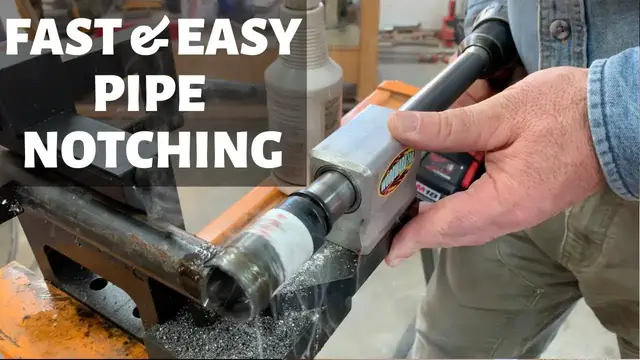
In this video, I want to show you how to use a simple little tool that's called a tubing notcher and
0:07
this is essentially what it does. It creates just the right kind of concave shape on the end of a pipe so that when you want to join it to another pipe
0:19
you've got a really nice fit and it doesn't take long. The fit can also
0:24
apply to a larger pipe. This is an inch and a half. This is three quarters and you can see how there's a
0:35
pretty good fit there and that's what the tubing notcher does. It's essentially a shaft. This rides on some needle bearings and a drill
0:46
attaches to it. It spins around like this. Now this end is a hole saw and
0:52
in this case the hole saw is the same diameter as one inch pipe. So I want to shape the end of this pipe so that it fits
1:04
perfectly over the one inch pipe and I'm going to be welding this. This is part of a railing project that I'm working on
1:12
but this tool quickly creates that shape that I need and I can create it at any diameter that I want to. The size of the hole
1:21
saw needs to match the diameter of the pipe that the that the notched
1:27
pipe is going to be joining. So I can choose any size of pipe, any size of
1:33
hole saw that I want. The only issue is that this hole saw be what's called a bi-metallic
1:40
design. You can't really see it anymore, but this is an Erwin hole saw. It has cut probably
1:48
30 or 40 notches in black iron pipe like this and the teeth are still
1:55
razor sharp. Part of that is because of the metallurgy of a bi-metal hole saw like this, high quality
2:02
Another thing has to do and I'll show you this is the feed speed, so how fast this thing is rotating and moving through the metal and also the liberal use of
2:13
cutting oil. Now that makes a huge difference. So we want the cutting action to happen quickly enough to make decent progress
2:20
but slowly enough that it doesn't build up heat on the hole saw because heat's going to change the consistency of the metal and it's not going to not going to cut anymore
2:28
It's not going to hold an edge. So this is one of those jobs safety glasses just in case and
2:38
like I said lots of cutting oil. So I'll just put some here and then we'll start. I'll show you what a proper feed rate looks like
3:11
You can't use too much oil on these things. There we go. The saddle notch
3:33
it's all cut. Now I'm going to use a file to remove the burrs because there's burrs all around the outside and oil
3:42
I'm going to be cleaning this pipe too. So it's just bare mild steel in preparation for welding but
3:48
that's what a tubing notcher does. Great tool, it works quickly as you can see and it leads to some some really nice joints
3:55
that make for form the foundation for for an excellent weld joint on this kind of pipe framework