0:00
So where are we right now? Well we're in what I call our third field. The house is way up there
0:06
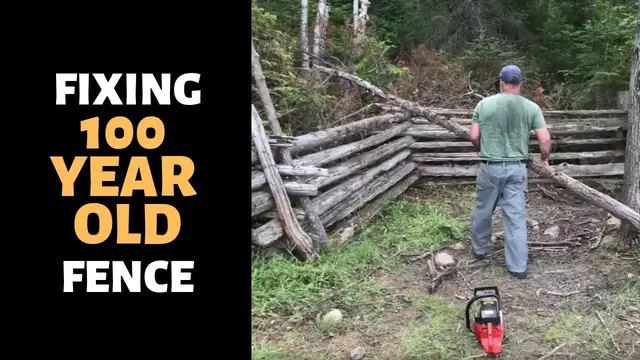
and we're doing some fence work here on the pastures. We've got these cedar rail fences
0:13
over most of the property and we're just brushing it out. The trees grow in and make it hard to
0:21
maintain the fence. It also causes the fence to rot faster too I found by holding the moisture
0:26
in around the fence. It's hard work and you know the whole pasture thing is at least for me at
0:37
least as much about keeping farmland going as it is about making a few pennies. You know every time
0:44
I'm out here at a place like this I'm thinking well you know Robert and I we're working pretty
0:49
hard we're working up a bit of a sweat but we've got a chainsaw, we've got a tractor and a wagon
0:56
and we can go home and sit down to a nice hot meal, run a water, wash our hands, the whole
1:01
the whole rest of it. It feels like a lot of work to be brushing out this line of fence here maybe
1:06
what is this four or five hundred yards long but then just look at these fields. Now these fields
1:12
were converted from a forest which could support almost nobody as far as food production goes to
1:21
something that's been feeding people in one way or another since 1890 and these trees aren't gonna
1:29
take this field back on my watch. I like trees. Trees are great. We need trees but we need trees
1:36
in moderation too. We also need plains you know human-made plains where we can grow food and
1:42
graze animals and things it's got to be a balance so it's a bit of a campaign for me. You know I've
1:49
been at these fields for more than 30 years now the fences are a lot better than they used to be
1:53
they'll hold cattle now they never used to be able to and we're doing things to improve this pasture
1:58
Right here for instance this is an old-time pasture plant called Vetch. It never used to grow here but
2:06
it's part of the frost seeding program that I do so spreading seeds out in March when there's still
2:12
a little bit of snow on the ground. This particular part of the field is kind of wet too. It holds the
2:18
water it doesn't dry very quickly in the springtime so I'm thinking of maybe having this some drainage
2:22
tiles installed here so that we can get more productivity about this but you know as I was
2:27
just saying to you Robert it's kind of an interesting spot. Right here is civilization of a
2:35
sort you know human beings have been doing something here for a long time. You on the other
2:39
side of that fence where we're throwing a lot of this brush and that's wilderness of a sort too
2:45
So this is the dividing line right here in one little corner of the world this is the dividing
2:49
line between civilization and non-civilization. That's pretty clear pretty stark dividing line
2:57
You know if you go that way if you go on the fence to the south you get into forested wilderness and
3:08
then about a mile and a half later it's open water and there's 200 miles of open water if you go
3:15
straight south. And that would be Lake Huron. Lake Huron in Ontario so every time I come out here I
3:20
just think of these things that kind of and that I have a responsibility for the time I'm around I
3:25
have a responsibility to this little patch of ground and it's actually satisfying to partner
3:32
with a piece of land like this for an extended period of time. You know get dirty cut your hands
3:38
work up a good appetite work up a sweat and then come back and see what you've done and see the
3:43
cattle grazing it's a lot of fun it's a lot of fun. This is exactly what I was hoping to achieve
3:48
hoping to experience when I decided to leave the city which is where I grew up
3:54
and turn my hand here at Country Life so that's kind of what that's all about