In December 2013, relatives of mine in Toronto spent Christmas in a cheap hotel miles from their home because of an ice storm and blackout that lasted as long as two weeks in some areas. Entire neighbourhoods were dark and cold, triggering burst pipes, the establishment of refugee-style warming centres, and about $200 million in insured damages.
All this started family conversations about how a homeowner might protect themselves against extended blackouts in the future, but as with many troublesome but infrequent disasters, the will to do anything past with the crisis. But the time to prepare for any crisis is always before it happens, and this is why you should look at the way home standby backup generators (HSBs) have gotten better and cheaper than back in 2013. Turning the next blackout event into a non-issue is what it’s all about.
How HSBs Work
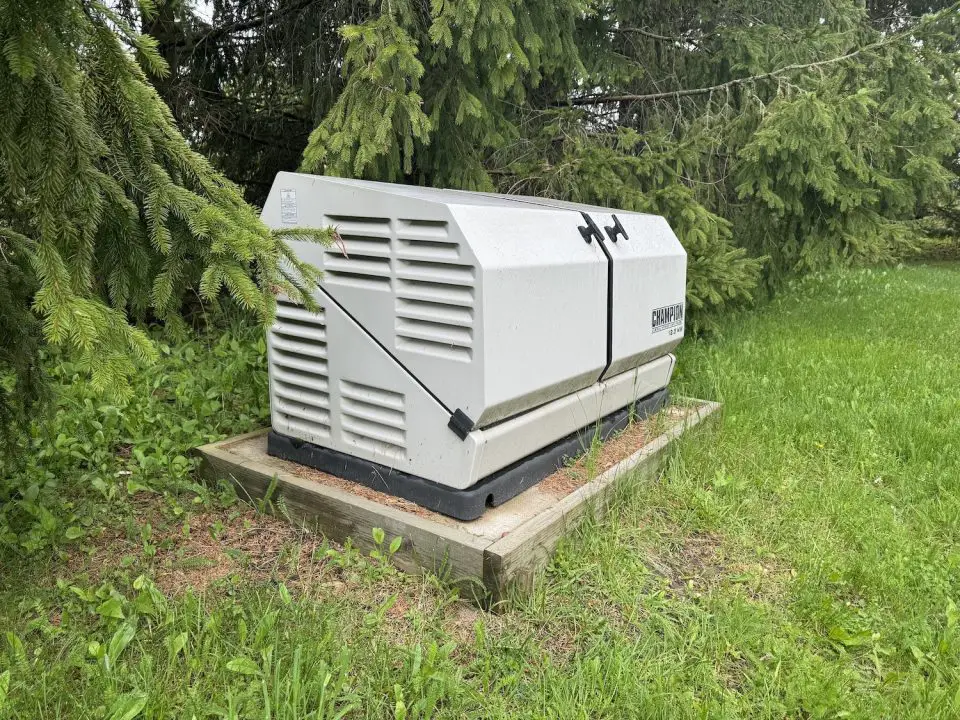
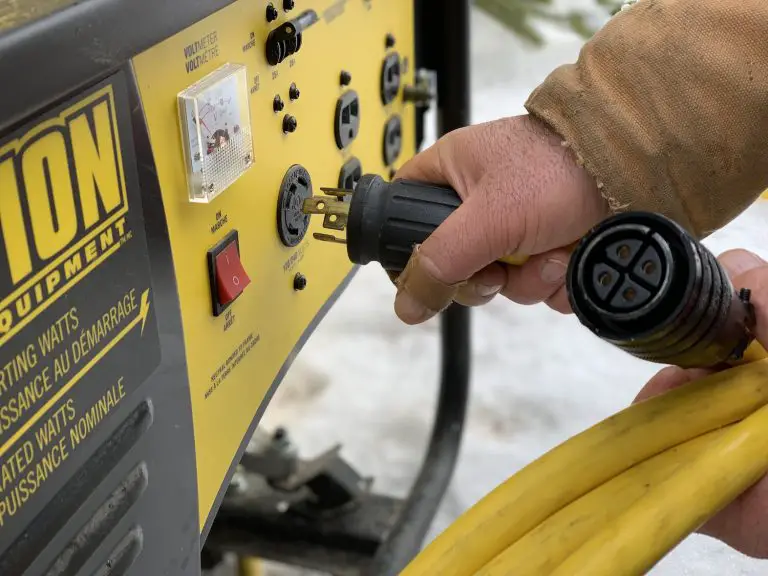
HSBs offer the simplest and highest output option for keeping lights and heat on when the grid fails. Their metal enclosures contain an engine and generator that’s permanently wired to your house in an interactive way. When utility power is present, the unit just sits there. Except for automatic and periodic short running of the engine every couple of weeks to keep it ready to start, nothing much happens. But as soon as grid power goes out, an automatic transfer switch that’s part of the system senses the change and fires up the engine of the HSB without you doing anything, delivering electricity until the grid comes back on again. When that happens the system shuts itself down until the next time. Today’s HSBs run on either propane or natural gas, so there’s no need to visit and re-visit a gas station for fuel.
HSBs Cheaper Now
Back in 2013, it could cost $20k to buy a sizeable HSB and have it installed. Costs today are substantially lower than this for the same size unit, but there’s another refinement that makes installed costs even lower.
A typical full size HSB puts out over 20,000 watts of power, and this is enough to keep even an electrically heated home warm in Canada. But maximum power is rarely required in a household because not all appliances are running all the time. Some things are more of a priority than others. Today’s best models can be pre-programmed to deliver power to the important things like heat and light, while other things like cooking a turkey, drying clothes or heating the hot tub could be postponed until the more critical big electrical loads are temporarily idle. This automatic capability comes from something called load management modules and it means that a smaller HSB can handle whole-house electrical backup, and do it while burning less fuel.
Smarter HSBs
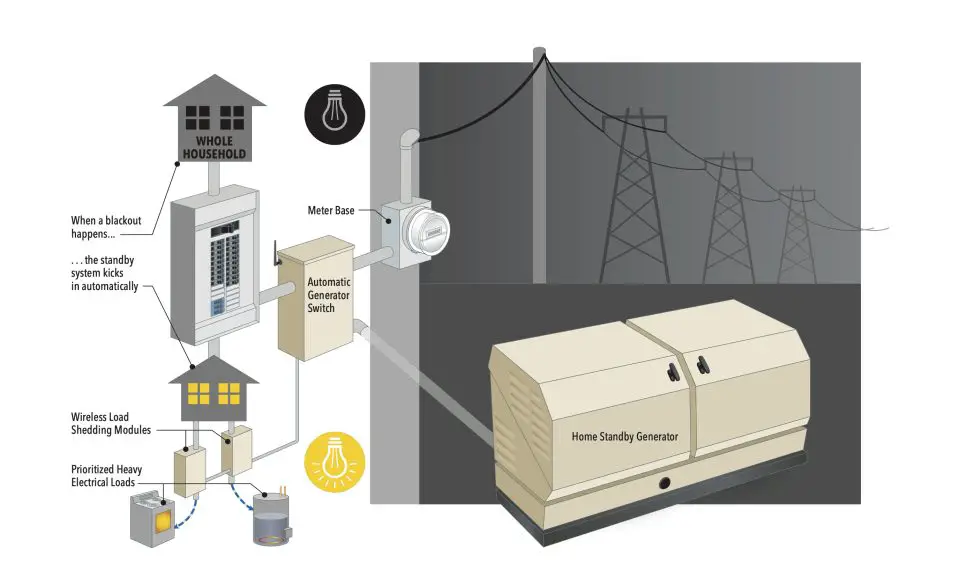
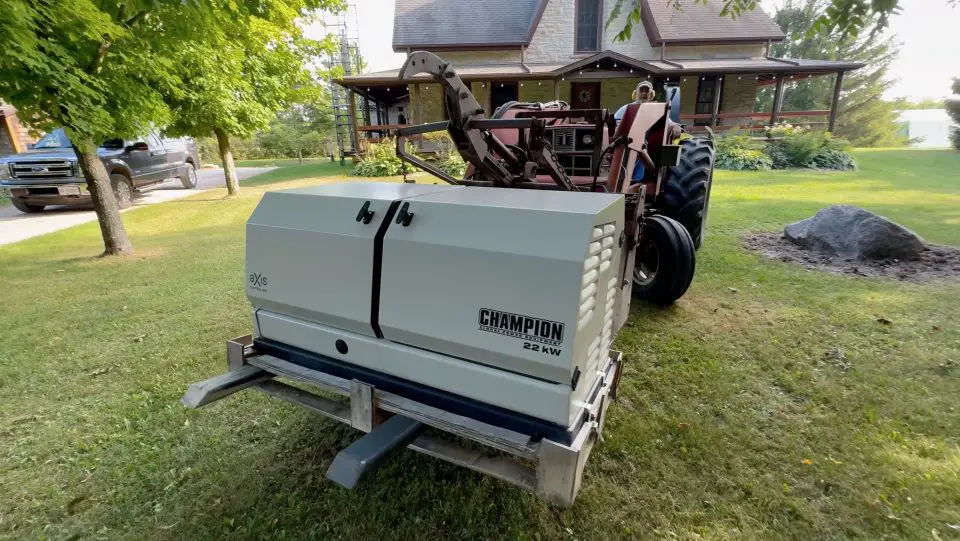
I know the most about Champion HSBs because I have one at my place. It’s a 22,000-watt unit with automatic load management capabilities using something they call aXis Load Management System. Up to 8 modules are wired into circuitry feeding large loads, with four different levels of priority assigned to each. When the load on the HSB reaches 80% to 90% of capacity, items designated #4 are shut down first while higher priority modules 1, 2 and 3 are left energized. If the load continues to rise, #3 gets shut down, then #2 modules, with everything coming back as the load drops. This system works well, but in practice how much can it reasonably reduce the size of an HSB?
If it takes 22 kW to operate everything in your home at once, an 18 kW unit with load management will be more than enough. If you’re happy with the system juggling more loads OFF and ON, then you could even get away with a 14 kW standby generator, keeping your life on track at lower cost no matter what happens with grid power.
Got questions about backup electrical power for your home? I’ve had lots of experience advising people on this. Connect with me at [email protected]





I hope you found this content useful!
Your generous support helps me produce more practical, hands-on content that I hope you’ll find useful.
Steve Maxwell