
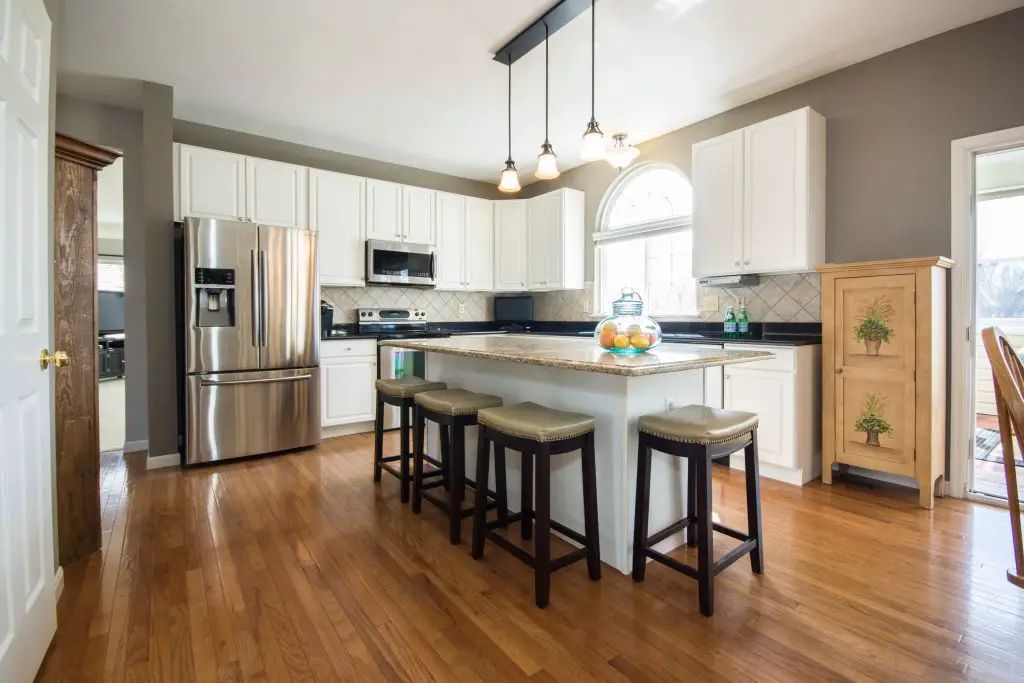
Anyone who has priced a kitchen has had this experience. Same room, same layout, three companies, and the numbers come back at eighteen, twenty six and thirty nine thousand.
The instinct is to assume somebody is overcharging. Occasionally somebody is. Far more often the three quotes describe three different kitchens that happen to occupy the same floor plan, and nothing in the paperwork makes that obvious.
I went through this on my own kitchen and then, because I could not leave it alone, went back through all three quotes with a tape measure and a lot of questions. Here is where the money actually goes.
Box construction is most of the difference
The part you never see accounts for a large share of the price.
Particleboard, plywood and solid wood carcasses all look identical once the doors are on and the kitchen is installed. They behave differently over fifteen years, especially near a dishwasher, and they cost very different amounts.
Ask for the carcass material, the thickness, and how the back panel is attached. A quarter inch stapled back and a half inch captured back are not the same cabinet, whatever the front looks like.
Drawer boxes are the same story. Dovetailed solid wood versus stapled particleboard is a real difference in feel and lifespan, and the quote rarely mentions which you are getting.
Stock, semi custom and custom are three different products
Stock cabinets come in fixed sizes, usually in three inch increments. Cheapest, fastest, and the gaps get covered with filler strips. In a room with square walls this is perfectly good.
Semi custom starts from a stock line and allows modifications: a cabinet made two inches narrower, a deeper pantry, an unusual finish. Most of the market sits here.
Custom means built for the room. Worth it in old houses where nothing is square and in kitchens with awkward geometry, and rarely worth the premium in a straightforward rectangle.
A quote that does not say which of the three you are buying is not a quote you can compare.
What the drawings tell you
Every serious cabinet quote comes with drawings, and most people glance at them and file them.
They are the most useful document in the package. The elevation tells you the door style and the reveal between doors. The plan tells you where the fillers go, which is where cheap layouts hide their compromises. The numbers tell you the actual cabinet sizes rather than the round numbers in the sales conversation.
Increasingly the package also includes a kitchen cabinet rendering of the finished room, produced from the same data the factory will cut from. That is the thing to study, because it shows you the proportions at eye level rather than as a set of rectangles.
Look at it for three specific things. Where the appliances sit relative to the doors. How wide the fillers are at the ends of runs. And whether the upper cabinets die into the ceiling or stop short with a gap that will collect dust for a decade.
Hardware is quietly expensive
Soft close hinges, full extension undermount slides, and the drawer organizers that make a kitchen pleasant to use are all line items, and some quotes include them while others do not.
On a mid sized kitchen the difference between basic side mount slides and good undermount ones can run to a couple of thousand dollars across every drawer. It is also the single thing you touch every day, so it is not the place to save.
Ask for the hardware brand by name. There are three or four that professionals use, and a quote naming one of them is telling you something a quote that says quality hardware is not.
What is not in the number
This is where quotes diverge most and where arguments start later.
Installation, sometimes. Countertops, usually not. Demolition and disposal, plumbing and electrical moves, drywall repair after the old cabinets come off, appliance panels, toe kick and crown molding, and the finish carpentry around the edges.
Write the list yourself and ask each company to mark each item as included, excluded or by others. The cheapest quote frequently has the longest excluded column.
The measurement that decides everything
Before any of this, measure the room properly. Wall to wall at floor height, at counter height and at ceiling height, in every direction, plus window and door positions and the height of the window sills.
Old houses move. A wall that is two inches out of plumb changes what can be installed, and finding that out on installation day is how projects gain a week.
Good companies re measure before ordering. If nobody has come out with a laser and a notebook before the deposit, that is worth a question.
Lead times are part of the price
The quote that arrives cheapest is sometimes cheapest because of when it ships.
Stock lines come in weeks. Semi custom runs six to ten. Full custom can be sixteen or more, and every one of those weeks is a week your kitchen is either functioning badly or not at all. If you are paying for a rental kitchenette or eating out, that cost belongs in the comparison.
Ask each company for the lead time in writing and what happens if it slips. A firm that quotes twelve weeks and hits it is worth more than one that quotes eight and delivers at fifteen with the countertop template waiting.
How I would compare next time
Put the three quotes side by side and force them onto the same terms. Carcass material and thickness. Drawer box construction. Hardware brand. Which of the three product tiers. What is excluded.
Then look at the drawings rather than the price, because that is where you find out whether they have all designed the same kitchen.
Mine came in at the middle number. The cheapest quote had a corner cabinet arrangement that would have made the nearest drawer unopenable with the dishwasher door down, which was visible in the plan and invisible in the price.





I hope you found this content useful!
Your generous support helps me produce more practical, hands-on content that I hope you’ll find useful.
Steve Maxwell