- Video Watch Time = 9 minutes
Drilling holes in thick steel can be frustrating if you use the wrong tools or technique. Large twist drill bits often grab the metal, dull quickly and make the job slow and difficult.
The solution is simple: use the right drill bit, apply cutting oil and follow the correct drilling process. In this guide you’ll see how step drill bits make drilling large holes in thick steel faster, cleaner, and easier.
Key Takeaways
• Drilling large holes in thick steel works best with step drill bits rather than large twist bits.
• Starting with small pilot holes or using step bits prevents grabbing and improves control.
• Cutting oil reduces heat and extends drill bit life.
• A drill press provides better control, but the same technique works with handheld drills.
• Correct drill speed prevents overheating and produces clean metal shavings.
Why Step Drill Bits Work Best for Drilling Thick Steel
Large twist drill bits often grab the metal when drilling thick steel because the full diameter of the hole is being cut at once. This creates friction, heat and sometimes sudden grabbing that can spin the workpiece or damage the drill bit.
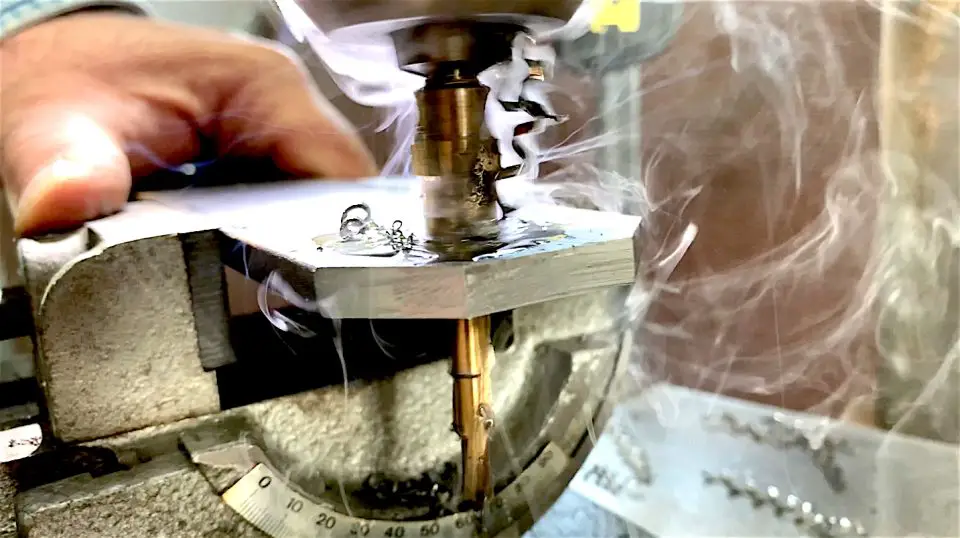
Step drill bits solve this problem by enlarging the hole gradually. You can see examples of step drill bits for drilling metal here. Each step cuts a slightly larger diameter than the previous one, allowing the bit to remove metal smoothly instead of grabbing.
When combined with cutting oil and the correct drill speed, step bits produce clean holes with far less effort. This is why they are commonly used in metalworking projects that require larger holes in steel.
Got some thick steel to drill holes in? Success comes down to the right kind of bit and cutting oil. The video lesson below is from my online course on welding – MIG WELDING FOR THE HOME WORKSHOP. Most people are surprised to see how the curls of hot metal just come rolling off the bit. Scroll down and see for yourself a “step bit” in action.


Welding Course Testimonials:
“I really enjoyed your MIG welding course. The pace was just right and the level of detail was good as well. I hope there’ll be similar classes in the future. Maybe something on advanced welding? Overall, very pleased and appreciate your time and quick responses to my questions. – KP Salisbury, NC
“I truly enjoyed being part of your MIG WELDING FOR BEGINNERS course. The information you provide via written and videos material IS very well put together and easy to follow. I truly was a beginner, never having even owned equipment nor additional tools. I will keep my eye out for any additional courses you have on these topics. ” – RM Chicago, IL
Frequently Asked Questions
What drill bit is best for drilling holes in thick steel?
Step drill bits are one of the easiest tools for drilling large holes in thick steel. Because they enlarge the hole gradually, they reduce grabbing and produce cleaner holes than large twist drill bits.
Do you need cutting oil when drilling steel?
Yes. Cutting oil reduces friction and heat while drilling. This helps drill bits cut more smoothly and last much longer when drilling steel.
Can you drill thick steel with a regular drill bit?
Yes, but it usually requires drilling several progressively larger pilot holes before reaching the final hole size. Step drill bits simplify this process because they increase the hole size in stages.
Do you need a drill press to drill steel?
A drill press provides better control and accuracy when drilling thick steel, but handheld drills can also work if the metal is securely clamped and the correct drilling technique is used.
Why do drill bits grab when drilling steel?
Drill bits often grab when the hole diameter is too large for the bit or when the drill speed is incorrect. Using a step drill bit and proper cutting oil greatly reduces grabbing.
Want more practical home improvement ideas like this?
Join the Bailey Line Road newsletter for weekly DIY tips, building advice and real-world solutions for homeowners.





I hope you found this content useful!
Your generous support helps me produce more practical, hands-on content that I hope you’ll find useful.
Steve Maxwell