A table saw is one of the most useful woodworking machines you can own. It cuts accurately, handles repeat work well, and makes many home workshop and renovation jobs easier. But because the blade is exposed and powerful, table saw safety needs to be part of the way you use the tool from the beginning. Note: This article includes two short videos below showing the table saw features and safety habits discussed here.

Choosing and safely using a table saw comes down to a few key things: knowing what type of saw suits your work, understanding how kickback happens, using safety gear, keeping your hands away from the blade, and relying on built-in features such as a riving knife, splitter, blade guard and push stick. Learn these basics and a table saw becomes much less intimidating and much more useful. Check out my post on 23-gauge pin nailers and my hand plane review to learn about two other great tools I recommend.
Key Takeaways
- A table saw is one of the most useful woodworking machines for DIY and shop work.
- Benchtop table saws are portable and compact, while contractor saws are heavier and more stable.
- Table saw safety begins with reading the manual and understanding the machine before cutting.
- Always disconnect power before working near the blade.
- Use safety glasses, hearing protection and a push stick for narrow cuts.
- Kickback is one of the main table saw hazards.
- A riving knife helps prevent wood from pinching the blade.
- Standing slightly to one side of the blade reduces injury risk if kickback happens.
- Modern safety technology, including flesh-sensing blade brakes, can reduce the risk of severe cuts.
- Good habits matter as much as good equipment.
Why Table Saw Safety Matters

Benchtop vs. Contractor Table Saws

A table saw is useful because it brings power, accuracy and repeatability together in one machine. The same qualities that make it productive also mean it deserves respect. The blade spins fast, the cut happens quickly, and wood can move unexpectedly if it pinches, twists or binds.
This doesn’t mean a table saw should be feared. It means the tool should be understood. Most safe table saw use comes down to keeping hands away from the blade, controlling the workpiece, standing in a smart position, using the right safety features, and never rushing a cut. When these habits become automatic, the table saw becomes a dependable workshop tool.
Most homeowners and hobby woodworkers choose either a benchtop table saw or a contractor-style table saw. Benchtop models are compact, portable and light enough to move around easily. Many sit on a folding stand, making them a good choice for small shops, garages, renovation work and jobsites.
Contractor table saws are larger and heavier. They usually offer more stability, better support and a more substantial work surface. They’re still movable, but not as easily as benchtop models. If you have a dedicated workshop and expect to use a table saw often, the extra weight and steadiness of a contractor saw can be an advantage.
What Is Table Saw Kickback?
Kickback happens when the spinning blade grabs the workpiece and throws it back toward the operator. It’s one of the main hazards of table saw use because it can happen suddenly and with great force.
Kickback often happens when wood gets pinched between the blade and the rip fence, or when a warped or misaligned board binds against the blade. As the teeth at the back of the blade rise, they can lift and launch the wood. This is why the workpiece must be guided smoothly and kept from twisting during the cut.
Preventing kickback is one of the most important table saw safety skills to learn.
Why a Riving Knife Is So Important
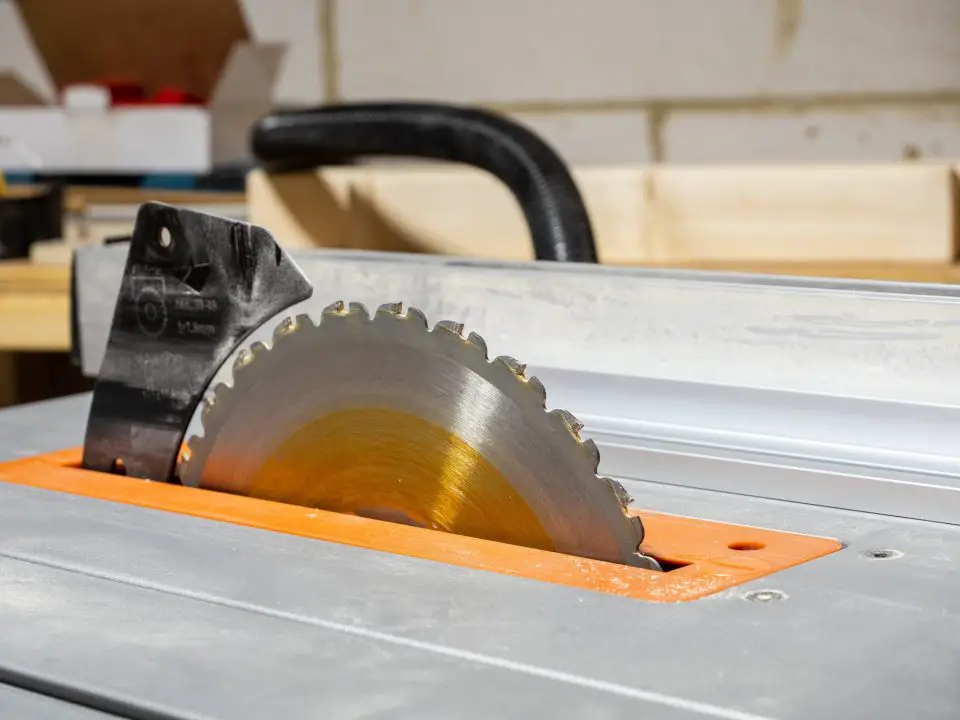
A riving knife is a thin piece of metal that sits just behind the saw blade. Its job is to keep the freshly cut wood from closing in on the blade after the cut begins. If the wood can’t pinch the blade, one of the main causes of kickback is greatly reduced.
Modern table saws often include a riving knife, and it should be left in place for most cuts. Older saws may have a splitter instead, which serves a similar purpose. Whether your saw uses a riving knife or a splitter, this part is not an inconvenience. It’s one of the most valuable safety features on the machine.
Use a Push Stick Before Your Hands Get Close
A push stick is simple, inexpensive and essential. It lets you feed narrow pieces of wood through the saw while keeping your hands well away from the blade. If your fingers would otherwise come near the blade, it’s time to use a push stick.
Push sticks are especially important when ripping narrow strips, cutting small parts or finishing the last portion of a cut. Keep one near the saw at all times so you don’t need to search for it in the middle of a job. The best safety tools are the ones close enough to use without thinking.
Safer Cutting Habits for Every Table Saw User
Before making a cut, check that the blade is sharp, the fence is locked, the workpiece is flat enough to cut safely, and nothing is loose on the table. Stand slightly to one side of the blade, not directly behind the wood. Keep steady pressure against the fence and table, and feed the work at a controlled pace.
Never reach over or behind a moving blade. Never remove offcuts while the blade is spinning. Never adjust the fence, blade height or guard while the saw is running. And whenever your hands need to be anywhere near the blade, disconnect the power and test the switch before touching anything.
Are SawStop-Style Table Saws Worth Considering?
Some modern table saws include flesh-sensing safety technology that stops and retracts the blade almost instantly when it contacts skin. SawStop is the best-known maker of this kind of system, and similar technology has also appeared in other designs.
This technology can reduce the chance of a severe injury, but it doesn’t replace good habits. You still need a riving knife, push stick, eye protection, hearing protection, proper stance and careful workpiece control. A safer saw is valuable, but the safest table saw is still one used by someone who understands the risks.
Frequently Asked Questions
What is the most important table saw safety rule?
The most important rule is to keep your hands away from the blade. Use a push stick when cuts get narrow, never reach near a moving blade, and disconnect power before adjusting anything close to the blade.
What causes table saw kickback?
Table saw kickback happens when the blade grabs the wood and throws it back toward the operator. This often happens when wood pinches the blade, binds during the cut or twists between the blade and rip fence.
What does a riving knife do on a table saw?
A riving knife sits behind the blade and keeps the cut from closing on the blade. This helps prevent pinching, binding and kickback.
Should I remove the riving knife from my table saw?
For most cuts, no. The riving knife is an important safety feature and should usually stay in place. It may need to be removed only for certain specialized cuts that the saw manufacturer allows.
Do I need a push stick for table saw work?
Yes. A push stick keeps your hands away from the blade during narrow cuts and when finishing a cut. Every table saw user should keep a push stick close at hand.
Is a benchtop table saw good enough for woodworking?
Yes, a benchtop table saw can work well for many DIY and hobby woodworking jobs. Contractor saws and cabinet saws are usually heavier and more stable, but a good benchtop saw can be very useful in a small shop.
What is the difference between a benchtop and contractor table saw?
A benchtop table saw is lighter, more portable and often used on a folding stand. A contractor table saw is heavier, larger and more stable, making it better for frequent shop use.
Are table saws dangerous?
Table saws can be dangerous if used carelessly, but the risks can be greatly reduced with good habits, proper safety gear, a push stick, a riving knife and careful attention to kickback prevention.
Should I wear hearing protection when using a table saw?
Yes. Table saws may not seem as loud as some machines, but repeated exposure can still damage hearing. Safety glasses and hearing protection should both be standard practice.
Is SawStop worth it?
SawStop-style technology can be worth considering because it can reduce the risk of severe blade-contact injuries. It doesn’t replace safe technique, but it can add a valuable layer of protection.





I hope you found this content useful!
Your generous support helps me produce more practical, hands-on content that I hope you’ll find useful.
Steve Maxwell