- Video Watch Time = 5 minutes
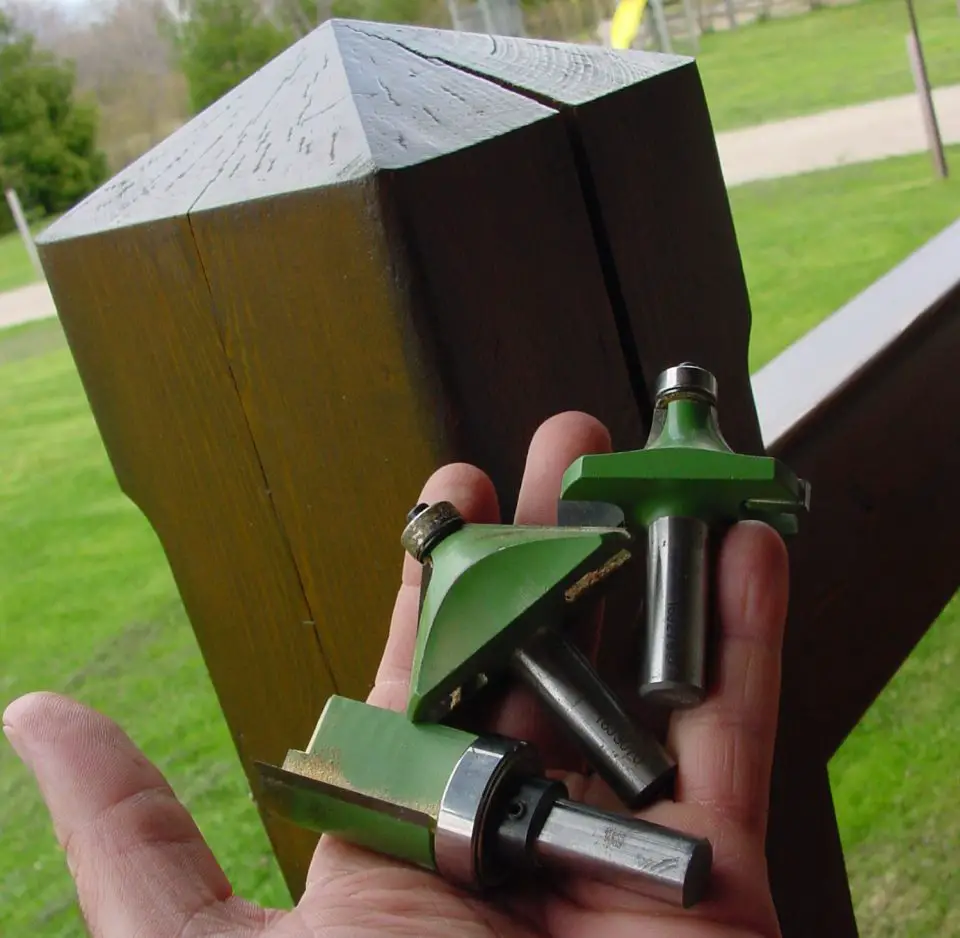
Woodworking routers are one of the most useful tools in any home workshop, but its real value comes from the bits you put in it. You don’t need dozens of profiles to do excellent work. In fact, a small group of well-chosen router bits can handle most of the shaping, trimming, and joinery work that comes up in everyday woodworking. In the video below, I take a look at three router bit profiles I’ve liked for years. I first shared these favourites back in 2010, and they’re still among the most useful and versatile bits I reach for today.
Key Takeaways
- A woodworking router is only as useful as the bits you put in it.
- You don’t need dozens of router bits to do good work.
- A small set of reliable bit profiles can handle most everyday woodworking tasks.
- Round-over, straight, and chamfer bits are among the most versatile choices.
- Quality router bits help produce cleaner cuts and better-looking results.
Why Router Bits Matter So Much
Router bits determine the shape of the cut, the look of the finished edge, and often the overall quality of the work. A good router in the hands of a careful woodworker can do impressive things, but only if the bit profile matches the job. That’s one reason I keep coming back to the same few bits again and again. Over the years I’ve found that a handful of dependable profiles do most of what I need, whether I’m softening edges, cutting joinery details, or adding a more refined finished look to a project.
1. Bit profile determines the finished look
Different bit shapes create very different results. Some produce a soft, comfortable edge. Others create a crisp line or a practical groove. Understanding these differences helps you choose the right bit instead of guessing.
2. A small set of good bits can do most jobs
Many woodworkers assume they need a huge collection of router bits, but that’s usually not true. A few quality bits used well will take you much farther than a drawer full of rarely used profiles. This is why I recommend people buy the bits they need, rather than an entire collection at once.
3 Essential Router Bit Profiles I Use Most
These are the router bit styles I reach for most often because they’re practical, versatile, and useful on a wide range of projects.
1. Round-over bits for smooth, finished edges
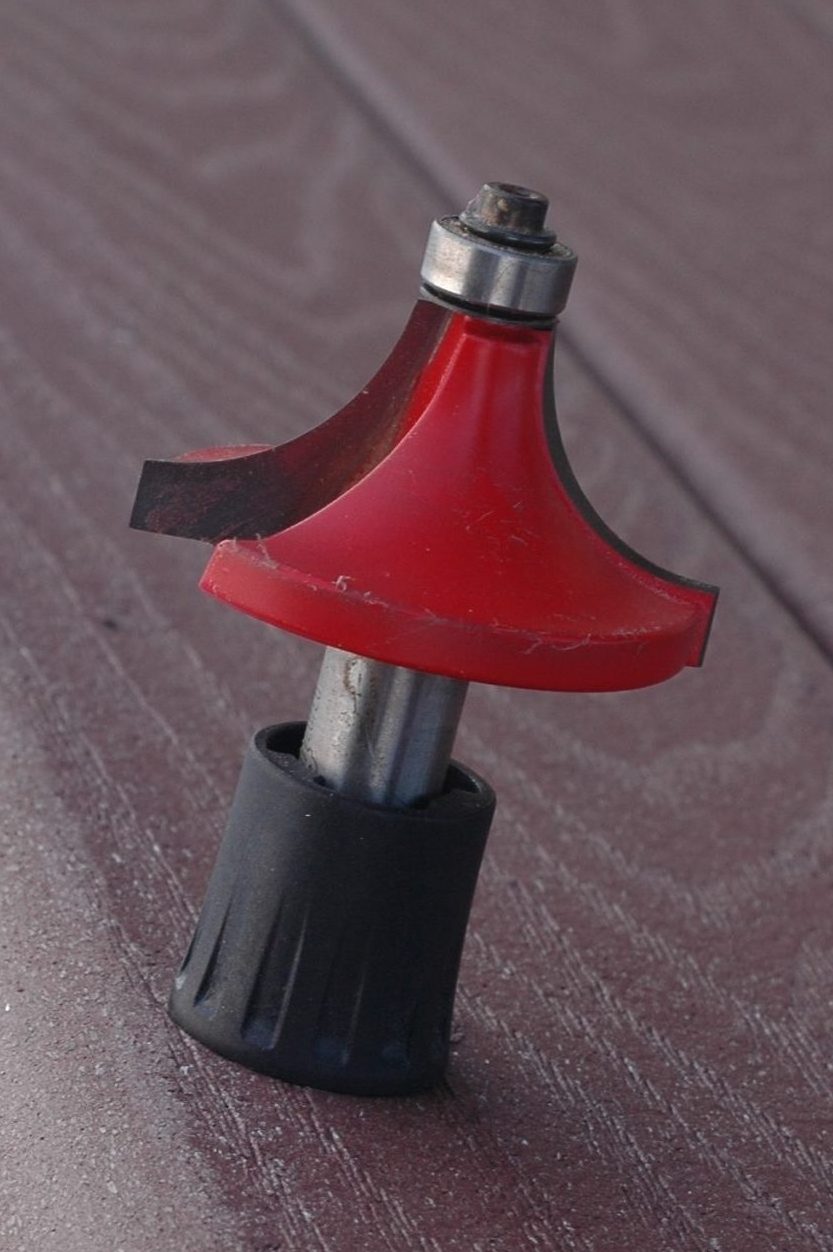
A round-over bit is one of the most useful profiles you can own. It removes the hard corner from a board and replaces it with a smooth radius that feels better in the hand and looks more finished. This is especially useful for shelves, tabletops, trim parts, cabinet components, and just about anything people will touch. Even a small round-over can make a project look more professional. I especially like using 3/4″ radius roundover bits to put a full, semi-circular, bullnose profile on the edges of overhanging deck boards. One pass on each face does the job.
2. Flush-trim bits for duplicating parts
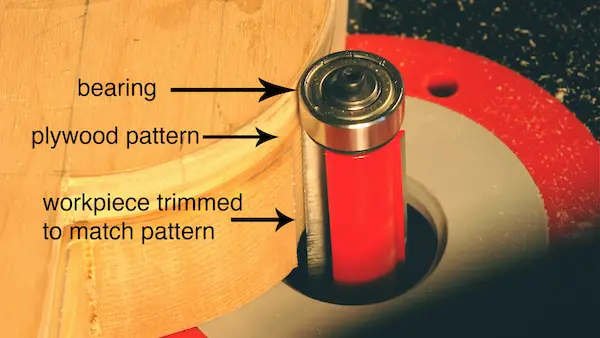
This is a super-powerful technique that you need to see in action. Flush-trim bits have straight cutters and a bearing either on the top of bottom that matches the diameter of the cutters. The bearing follows a precise pattern made previous, and follows this pattern to make a project part that’s identical to the pattern. Check out the action here.
3. Chamfer bits for crisp decorative edges
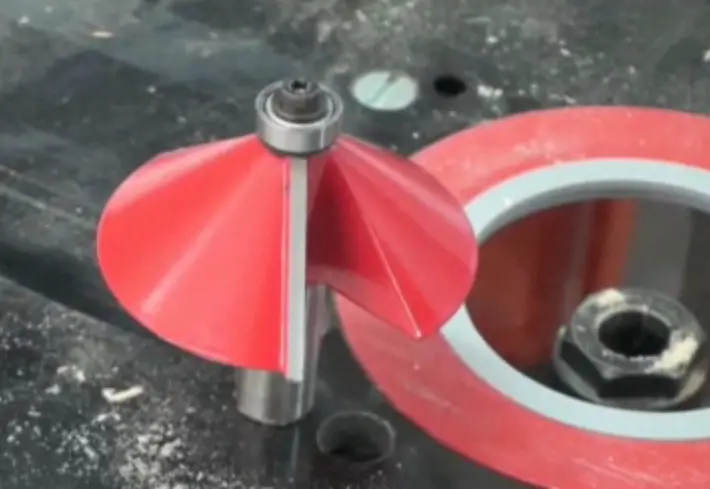
Chamfer bits cut an angled edge instead of a curved one. This gives woodwork a clean, sharp, more architectural look. Chamfers are great when you want a project to look more defined without being fussy or ornate. They also help ease edges in a practical way while still adding visual interest. Used lightly, a chamfer can make simple work look intentionally designed.
How to Choose Router Bits That Actually Work Well
Not all router bits perform the same. Good-quality bits cut more cleanly, last longer, and usually run more smoothly.
1. Carbide quality matters
Carbide-tipped bits generally hold their edge longer than cheaper alternatives. They cost more upfront, but the better cut quality and longer service life are usually worth it.
2. Match the shank size to your router
I prefer 1/2-inch shank bits when their router accepts them because they tend to run with less vibration than 1/4-inch shank versions. Shank refers to the shaft that engages with the router and gets locked into it for use.
3. Sharp bits leave cleaner cuts and work more safely
Dull bits burn wood, strain the router, and leave rougher results. Obvious, but worth a mention. Sharp bits cut more efficiently and make it easier to control the work. Even gum that can build up on router bits after working with softwoods can reduce the quality of results. Oven cleaner is a great way to clean gummy router bits.
Router Bit Tips for Better Results
Even the best router bits work better when used with a few basic habits in mind.
1. Make test cuts first
Before routing the real workpiece, test the setup on scrap wood of the same kind. This lets you confirm depth, profile, and overall appearance before committing to the final cut. This is a crucial step.
2. Take light passes instead of forcing a deep cut
Trying to remove too much material at once usually leads to tear-out, burning, or rough results. Multiple light passes are slower, but they produce a better finish and put less stress on the tool. My favourite approach is to do the bulk of heavy routing, then make a final pass very light and rather fast.
3. Feed the wood steadily and safely
A steady feed rate helps keep the cut smooth. Too fast and the finish suffers. Too slow and the bit can burn the wood. Good router work is all about control, sharp tooling, and patience.
Frequently Asked Questions
What are the best router bits for beginners?
The best router bits for beginners are usually a round-over bit, a straight bit, and a chamfer bit. Together they cover edge shaping, grooves, dados, and simple decorative work.
What router bits are most useful for woodworking?
The most useful router bits for woodworking are the ones that handle the widest range of jobs. For many people, that means round-over, straight, and chamfer bits.
Are expensive router bits worth it?
Better-quality router bits often last longer, cut cleaner, and produce more reliable results. If you use your router regularly, quality bits are usually worth the extra cost.
What is a straight router bit used for?
A straight router bit is used for grooves, dadoes, recesses, trimming tasks, and other flat-bottomed cuts where accuracy matters.
What is a round-over bit used for?
A round-over bit softens sharp edges and gives wood parts a smoother, more finished appearance.
What is a chamfer router bit used for?
A chamfer bit cuts an angled edge that gives projects a crisp, decorative look while also easing corners.
Want more practical home improvement ideas like this?
Join the Bailey Line Road newsletter for weekly DIY tips, building advice and real-world solutions for homeowners.





I hope you found this content useful!
Your generous support helps me produce more practical, hands-on content that I hope you’ll find useful.
Steve Maxwell